
- Tier 1: Standard International Checkup (₩800,000–₩1,500,000 / ≈ USD 600–1,100): Half-day format, 60–80 test items
- Tier 2: Enhanced Comprehensive (₩1,500,000–₩2,800,000 / ≈ USD 1,100–2,100): Full-day or half-day + afternoon results consultation
- Tier 3: Premium Executive (₩2,800,000–₩4,200,000 / ≈ USD 2,100–3,150): Full-day or two-day format
The calendar call came at 6:47 a.m. in Lagos. My GP had found something on a routine ECG — probably nothing, he said, but he wanted a full cardiac workup. The NHS waiting list was fourteen weeks. Going private in London: £3,800, scattered across three clinics over two weeks.
Then a colleague mentioned he’d done a two-day full-body checkup in Seoul for about half that, coordinated in one building, with results the same day. That’s when I started researching Korean health checkup programs for international patients.
Here’s what I found — and what most overseas guides miss.
Why Korean Executive Health Checkups Attract International Patients
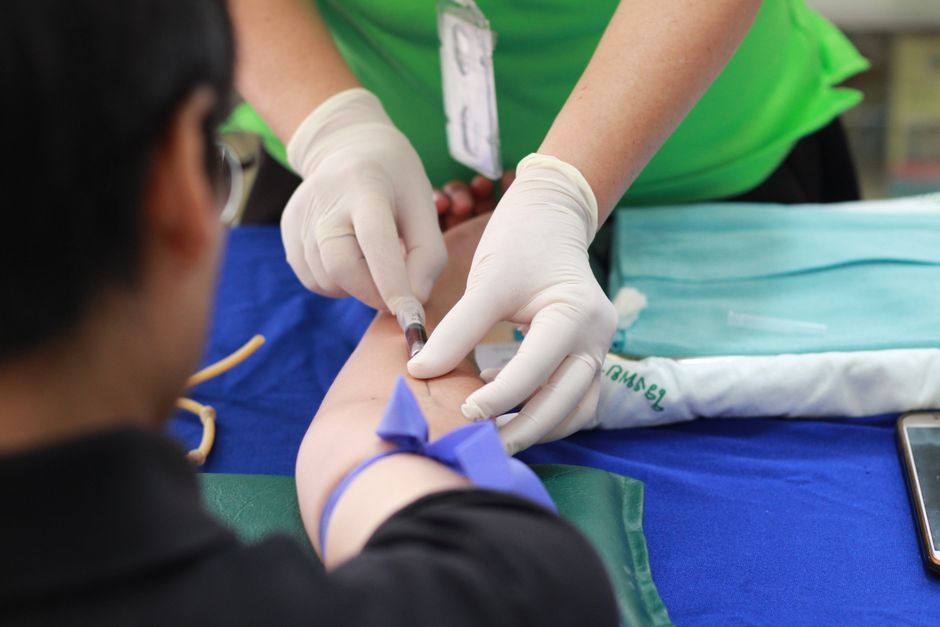
South Korea’s comprehensive health checkup industry grew out of the Korean National Health Insurance Service’s (NHIS) mandatory screening program, which since 1995 has offered biennial checkups to all insured workers.
The private-sector response was to build premium tiers far beyond what insurance covers — multi-day, multi-specialist programs that consolidate what you’d normally coordinate across a dozen separate appointments.
The result: Korea now hosts some of Asia’s most sophisticated health screening infrastructure, benchmarked by the Korea Institute for Health and Social Affairs (KIHASA) and regulated by KOIHA (Korea International Healthcare Accreditation).
For international patients, the proposition is specific — not just cheaper than Western private healthcare, but structurally different in how it packages and delivers results.
The Four Tiers You’ll Actually Encounter
Tier 1: Standard International Checkup (₩800,000–₩1,500,000 / ≈ USD 600–1,100)
Half-day format, 60–80 test items. Covers blood panel (CBC, lipid profile, liver/kidney function, thyroid, blood sugar, hepatitis B/C, HIV), urine analysis, chest X-ray, ECG, abdominal ultrasound, BMI/blood pressure, and basic cancer markers (CEA, AFP, PSA for men, CA-125 for women).
This is the baseline that most Korean corporate health programs use. For an international patient arriving specifically for screening, this tier is too thin — you can get most of these tests in your home country. The value starts at Tier 2.
Tier 2: Enhanced Comprehensive (₩1,500,000–₩2,800,000 / ≈ USD 1,100–2,100)
Full-day or half-day + afternoon results consultation. Adds: upper endoscopy (OGD) for gastric/esophageal cancer screening, colorectal cancer markers or sigmoidoscopy, bone density (DEXA), pulmonary function test (PFT), ophthalmology and otolaryngology exam, detailed cardiac panel (echocardiogram or stress test), and women’s programs add pelvic ultrasound and mammography/thermography.
This is where Korea genuinely differentiates. The upper endoscopy — which in the UK or US would require a separate specialist referral, a waiting period, and a separate payment — is included as standard.
Korea’s gastric cancer rate has driven very high endoscopy competency nationally, and the NHIS screening data shows Korea runs more than 6 million endoscopies per year with extremely low complication rates. For patients over 40 from high-incidence populations, this alone is worth the trip.
Tier 3: Premium Executive (₩2,800,000–₩4,200,000 / ≈ USD 2,100–3,150)
Full-day or two-day format. Adds: whole-body low-dose CT or PET-CT (cancer surveillance), brain MRI (stroke risk screening, particularly relevant for patients with family history or hypertension), full cardiac CT with coronary calcium scoring or coronary CTA, sleep study or HRV analysis, and nutrition/genetics consultation.
Asan Medical Center’s Center for Health Promotion (Seoul, Songpa-gu) is the benchmark for this tier. Asan handles over 200,000 health screenings per year and publishes outcome data — their five-year early-cancer detection rate for endoscopy-based programs is among the highest published in peer-reviewed Korean oncology journals.
A two-day Asan executive program (코리아 VIP 건강검진) as of 2025–2026 runs approximately ₩3,200,000–₩4,000,000 for international patients, inclusive of basic translation services and a results briefing in English.
Samsung Medical Center’s Comprehensive Medical Examination Center (Seocho-gu, Seoul) offers comparable programs. Samsung’s international health checkup unit has published English-language patient guides and posts updated pricing at their Global Health Services portal. Their VVIP tier adds same-day genetic risk panel interpretation (BRCA1/2 for at-risk patients, pharmacogenomics for medication planning).
Tier 4: VVIP / Bespoke (₩4,200,000–₩8,000,000+ / ≈ USD 3,150–6,000+)
Two-day inpatient-equivalent with dedicated coordinator, private consultation suites, specialist follow-up consultations (cardiologist, oncologist, neurologist) included in the package, and international patient liaison throughout. Seoul National University Hospital’s Healthcare System (SNUH) offers a two-day bespoke program that assigns a senior physician as the primary coordinator across all specialties, with results presented in a 60-minute structured debrief rather than a paper printout.
Wait times for international patients: typically 2–4 weeks for scheduled programs, faster for direct KHIDI-registered agency referrals.
What Korean Checkup Programs Do Better — and Where the Gaps Are
What Korea does better:
One-building integration. Most Tier 2–3 programs run entirely within a single comprehensive health center, not across multiple floors of a hospital. Results — imaging, labs, cardiology, gastroenterology — are reviewed by a multi-specialist panel on the same day. You leave with a unified report, not seven PDFs from seven different departments.
Speed. Preliminary results for most blood and imaging work within the same day for Tier 1–2; comprehensive results within 1–2 business days for Tier 3+.
Endoscopy expertise. Korea’s national gastric cancer screening program means endoscopists in premium health centers perform high case volumes with corresponding skill depth. Detection rates for early-stage lesions at places like Asan and SNUH are meaningfully higher than global averages.
Cancer marker sensitivity. Premium Korean programs often include a broader panel of tumor markers than standard Western executive health packages — partly because Korea’s national cancer surveillance culture has normalised these as baseline screening rather than diagnostic tests.
Where the gaps are (operator-grade pain):
Translation quality varies by tier. Tier 1–2 programs at smaller private clinics may provide reports in Korean with an English summary only. The summary can omit findings that a specialist in your home country would need.
If you’re having imaging interpreted by a cardiologist back home, ask explicitly for the raw DICOM files on a USB, not just the printed report. Top-tier programs at Asan, Samsung, and SNUH produce full English reports by default — but confirm this in writing before arrival.
Follow-up gap. Korean checkup programs excel at detection and reporting; they are not designed to own your follow-up care plan.
If the program finds an incidental finding — say, a 4mm pulmonary nodule — they will document it and recommend follow-up imaging in 6–12 months, but the logistics of acting on that finding when you return to Nigeria, Qatar, or the Philippines are entirely your responsibility.
To close this gap, ask the program to refer you to appropriate follow-up specialists, either in Korea for immediate second-opinion consultations or via telemedicine to your home-country care team.
Preparation requirements. Most programs require 8–12 hours of fasting before arrival, no aspirin/NSAIDs for 7 days before endoscopy, and bowel prep for colonoscopy variants.
International patients who arrive unprepared (common when the pre-arrival instructions were in Korean or weren’t transmitted through the booking channel) may have components rescheduled, disrupting a tight itinerary.
Practical Planning: What to Book, When, and How

Lead time. Top programs at Asan, Samsung, and SNUH book 2–6 weeks in advance for international patients. The KHIDI-registered facilitator network (searchable at visitmedicalkorea.com) can sometimes expedite scheduling for direct referrals.
For solo bookings, start with the hospital’s international patient center; for complex cases or bundled care plans, ask the center whether a dedicated coordinator is available.
Best time to combine with treatment. If you’re already planning a procedure in Korea — joint replacement, cancer surgery, cardiac intervention — scheduling the executive checkup 6–8 weeks prior means the results directly inform the pre-op workup and can be shared with your Korean surgeon in advance.
This eliminates duplicate testing and reduces the total number of trips.
What to bring. Previous medical records (blood work from the last 12 months if available, imaging on CD/USB, medication list), your passport, and travel insurance documentation.
Most premium programs will request a pre-visit medical history form — complete it fully, including family cancer history, since this affects which panels the program includes.
Visa. A C-3-3 medical tourism visa covers health screening stays under 90 days. A hospital invitation letter (provided by the health center) is required for the visa application. Most programs issue this within 24–48 hours of booking confirmation.
The Real Cost Comparison
A two-day Tier 3 executive program (full-body CT, brain MRI, cardiac CT, endoscopy, comprehensive labs, specialist debrief) at Asan Medical Center runs approximately ₩3,500,000 for an international patient — roughly USD 2,600 at current exchange rates.
A roughly equivalent program in the UK (private Bupa Health Clinics “Ultimate” package) runs £2,900–£3,800, often without the imaging components or requiring separate specialist referrals for MRI/CT.
A comparable program in the UAE (Dubai’s executive health center tier) runs AED 12,000–18,000 (≈ USD 3,300–4,900), and in Singapore, SGD 4,000–7,000 (≈ USD 3,000–5,200).
Korea isn’t always cheapest on raw price — Singapore competes closely on some tiers. The difference is in what’s included: Korea’s programs embed the endoscopy, the imaging specialist panel review, and the coordinator infrastructure into the base package. In Dubai or London, these are typically add-ons that inflate the final invoice.
Who This Makes Sense For
Korean executive health checkup programs are best suited for:
- Patients 40+ with cardiovascular risk factors (hypertension, family history, high BMI) who want a comprehensive baseline
- Anyone with a family history of gastric, colorectal, or liver cancer — Korea’s endoscopy and imaging protocols are calibrated for these
- Expats or diaspora patients who travel frequently and prefer to consolidate annual screening into one highly efficient 2-day program
- Patients planning a Korean procedure who need pre-op workup, and want the results in the same ecosystem as their treating surgeon
- Executives or business travelers whose home-country insurance doesn’t cover comprehensive screening, or whose waiting times make private annual screening impractical
It’s less suited for patients who only need a single-organ workup (e.g., just a cardiac echo, just a colonoscopy) — standalone procedures at specialist clinics in Seoul are often faster and cheaper than anchoring into a full executive program.
Connecting a Health Checkup to a Treatment Journey
The most efficient use of a Korean executive health checkup is as the entry point to a care journey, not a standalone trip.
Patients who travel to Korea for screening and are found to have a treatable condition — early-stage cancer, a cardiac anomaly, a spine issue — are already in the country’s healthcare system.
After the checkup, you can decide whether to continue treatment in Korea or return home with a documented diagnosis and treatment plan; ask the program how findings are handed to specialists and how treatment quotes are requested.
For a growing number of patients from West Africa, the Gulf, and Southeast Asia, the executive checkup has become the starting point — not a separate destination.
KmedTour publishes independent, information-only guides on medical travel to Korea. All hospital and pricing information should be verified directly with the hospital’s international patient center before booking. Medical cost estimates are approximate and subject to change.