
- Busan is a different equation
- International patients are only beginning to discover what Busan’s hospitals have quietly been building for the past decade
- Busan offers all three, and in several specialties, it offers something Seoul clinics cannot: genuine academic-hospital depth at a price point that is 15–30% lower than equivalent Seoul providers
Every guide to Korean medical tourism begins and ends in Seoul. Gangnam. The Apgujeong clinic corridor. Sinchon’s university hospitals. Seoul gets the SEO and the Instagram posts.
It also gets the eight-hour wait at Incheon Immigration, the 45-minute taxi queue to Gangnam, and the treatment schedule that puts you in a clinic on a Tuesday with twelve other international patients from four different countries all competing for the same post-op consultation slot.
Busan is a different equation.
Korea’s second city — 3.4 million residents, a deep-water port, direct flights from Southeast Asia and Japan, and a medical infrastructure built around two of Korea’s most serious academic hospital systems — is where Korean patients from the south of the peninsula go when they want rigorous clinical care without the Seoul premium.
International patients are only beginning to discover what Busan’s hospitals have quietly been building for the past decade.
This guide is not for patients seeking the cheapest nose job. It is for patients who want verifiable clinical quality, genuine coordinator attention, and a recovery experience that does not feel like a factory.
Busan offers all three, and in several specialties, it offers something Seoul clinics cannot: genuine academic-hospital depth at a price point that is 15–30% lower than equivalent Seoul providers.
The Two Anchors: Pusan National University Hospital and Dong-A University Medical Center
Any serious evaluation of Busan medical tourism begins with these two institutions.
Pusan National University Hospital (PNUH) is a Level I regional emergency center and one of fourteen national university hospitals designated by Korea’s Ministry of Health and Welfare (MOHW). It has operated an international patient center since 2014 and processes approximately 3,000 international outpatients per year across its specialist departments.
Its strongest departments — from an international-patient perspective — are oncology (comprehensive cancer center with multidisciplinary tumor boards), orthopedics (PNUH’s joint replacement program is one of the highest-volume in the Gyeongsang region), and hepatobiliary surgery.
PNUH is accredited under the Korea Institute for Healthcare Accreditation (KOIHA), the same standard that governs international-patient facilities across Korea’s national university hospitals.
Dong-A University Medical Center is a private university hospital with 1,100 beds and a particular strength in dental medicine and oral-maxillofacial surgery — a combination that is difficult to find at academic-hospital quality outside of Seoul.
Its department of dentistry runs Korea Dental Association-approved clinical training, meaning its standards are nationally audited, not self-certified.
For patients considering complex dental work — full-arch implant restorations, orthognathic surgery, or bone grafting — Dong-A provides a clinically defensible option in a city where costs run 20–25% below comparable Seoul private university hospitals.
Beyond these two, Busan has Inje University Haeundae Paik Hospital (a second academic center, strong in cardiology and internal medicine, located in the Haeundae beach district), and Good Sunshine Hospital, a private rehab and musculoskeletal facility that has become a quiet referral destination for post-surgery rehabilitation, particularly for patients who have undergone joint replacement in Seoul and want to complete recovery in a lower-cost, lower-density environment before flying home.
The Logistics Case for Busan
Patients from Southeast Asia are flying past Busan every day on their way to Seoul.
Gimhae International Airport (PUS) handles direct flights from Singapore (Scoot, Singapore Airlines), Kuala Lumpur (Air Busan, AirAsia), Manila (Cebu Pacific, Philippine Airlines), Ho Chi Minh City (Vietnam Airlines), and Bangkok (Thai Lion Air, Air Busan).
Most of these routes operate multiple times weekly and cost 30–50% less than equivalent Seoul-bound tickets because they use a regional airport without Incheon’s capacity pricing.
For a patient from Manila whose primary destination is orthopedic surgery or dental work, the total cost calculus — airfare plus treatment plus accommodation — may favor Busan by a material margin even before factoring in lower local costs.
From Japan by ferry: The Busan–Fukuoka ferry route (Camellia Line, BeatLine, Kobee) runs multiple times daily and takes approximately three hours.
A meaningful but underreported segment of Korean medical tourists are Japanese patients — particularly for dental and cosmetic procedures where Korean prices, even including the ferry crossing, undercut equivalent Japanese providers.
Busan’s proximity to Fukuoka (the route is often compared to the London-Paris Eurostar corridor in cultural terms) makes it the natural entry point for this segment.
Within Busan: Unlike Seoul, where hospital-to-accommodation distances can be significant and traffic unpredictable, Busan’s major hospital clusters are near the Seomyeon district (city center) and Haeundae (beach district).
Both are well-served by Busan Metro Line 2, which is clean, reliable, and cheap. For a patient managing post-operative fatigue, the ability to reach a hospital from accommodation on a single metro line — without a taxi — is not a trivial advantage.
What Busan Is Not Good For (Be Honest With Your Coordinator)
Busan’s medical tourism infrastructure is real but narrower than Seoul’s. If you need any of the following, Seoul is the more appropriate destination and a good coordinator will tell you so:
Highly specialized elective cosmetic procedures. The density of experienced cosmetic surgeons in Gangnam — rhinoplasty specialists, facial contouring surgeons, blepharoplasty specialists with ten thousand cases — is not matched anywhere else in Korea.
Busan has competent cosmetic surgeons, but the concentration of specialized experience and the ability to choose between a dozen credentialed specialists in a single specialty does not exist outside Seoul.
Oncology clinical trials. Seoul National University Hospital, Asan Medical Center, and Samsung Medical Center run the majority of Korea’s cancer-related clinical trials. If access to a specific trial or to leading oncologists in rare cancers is the primary objective, Busan’s PNUH — while solid — is not the right choice.
Same-week availability at high volume. Busan hospitals are less crowded than Seoul equivalents, but this also means they have smaller international-patient coordination teams. If you need a confirmed appointment within seven days and need coordinator support in multiple languages simultaneously, Seoul’s larger hospitals have more infrastructure for urgent scheduling.
The Recovery Environment: What Seoul Cannot Offer
This section is where Busan’s case becomes genuinely compelling for a specific patient profile: those planning an extended stay of two to six weeks.
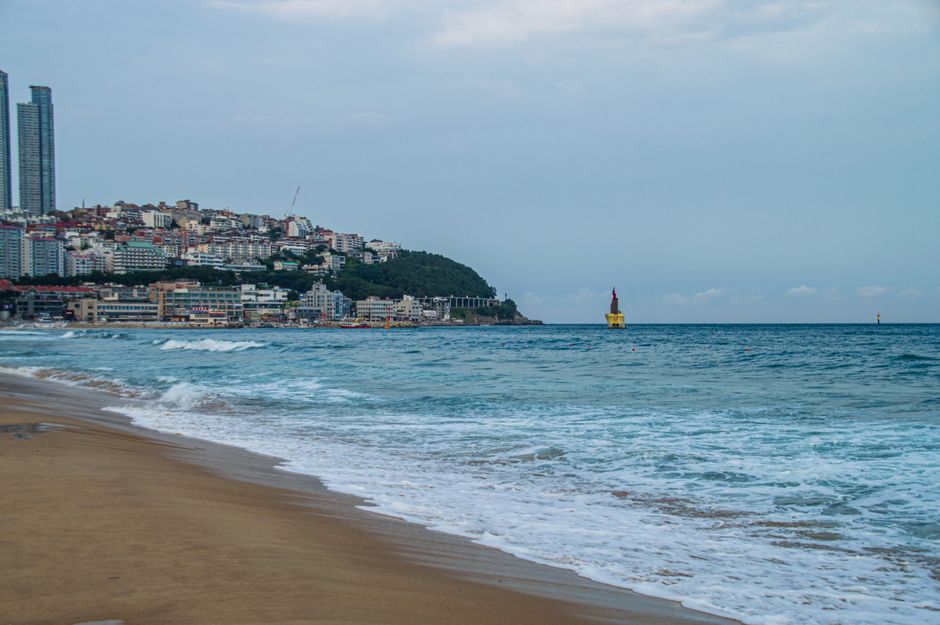
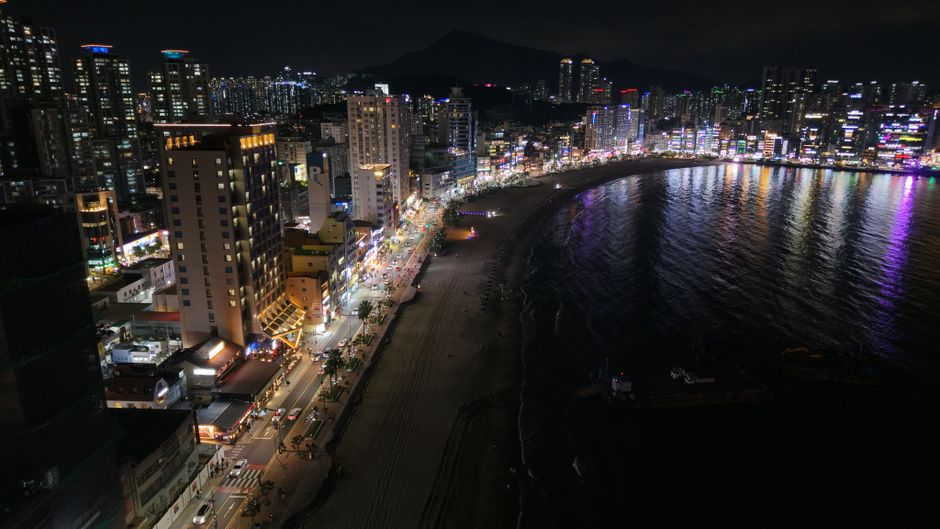
Haeundae — Busan’s beach district — is one of the few places in Korea where a recovering patient can walk on a beach in the morning, visit a traditional bathhouse (jimjilbang) in the afternoon for heat-based muscle recovery, and have a KOIHA-accredited hospital within a twenty-minute metro ride.
The Haeundae district has developed a visible ecosystem of accommodation options with medical-stay packages — studio apartments and pension-style guesthouses that cater to patients who need proximity to Inje Haeundae Paik Hospital without the clinical sterility of a hotel.
For patients whose procedure requires restricted activity but not bed rest — the profile of most orthopedic or major dental patients in weeks two through four — this matters.
Recovery compliance improves when the recovery environment is pleasant enough that patients want to stay. Busan provides this in a way that central Seoul’s business-district hotels do not.
Gwangalli beach (connected to Haeundae by metro, 20 minutes) and the Nampo district (near Dong-A University Hospital) offer similar environments at lower cost.
Busan’s food culture — the city is widely regarded inside Korea as having the country’s best seafood, and fresh fish markets like Jagalchi are within walking distance of accommodation in the Nampo area — creates a recovery experience that patients remember differently than the clinical efficiency of a Gangnam stay.