
- This matters for solo travelers more than any other patient group: you don’t have a companion to translate, to fetch food from the GS25 downstairs, to flag a nurse if you’re confused
- The hospital’s international desk fills part of that gap — but only part
- For a solo traveler, this is a named person at home (a family member, a trusted friend) with documented authorization
Most medical-tourism guides assume you’re bringing someone. They talk about companion suites, caregiver meals, dual-occupancy guesthouses near Severance Hospital, and who holds your hand in the recovery room.
But a sizable share of international patients travel unaccompanied — a 38-year-old professional from Lagos flying to Seoul for rhinoplasty, a retired engineer from Riyadh planning a comprehensive health checkup at Korea University Anam Hospital, a single parent from Singapore who can’t take another person away from home for two weeks while undergoing thyroid surgery at Samsung Medical Center.
Traveling solo for medical care in Korea is genuinely doable. It requires different logistics than bringing a companion, but Korea’s medical-tourism infrastructure — particularly in Seoul and Busan — is unusually well adapted to unaccompanied foreign patients.
This guide covers what changes when you’re on your own and what you need to put in place before you board.
Why Korea Is Manageable Alone

South Korea ranks among the world’s most navigable countries for independent travelers, and its medical system has invested heavily in English-language support specifically because it competes internationally for patients.
The Ministry of Health and Welfare’s Medical Korea program requires registered hospitals to maintain international health care centers (국제진료센터) with dedicated English, Chinese, Arabic, and in many hospitals Russian-speaking coordinators.
Severance Hospital’s International Health Care Center (IHCC) at Yonsei University Health System, Samsung Medical Center’s International Cancer Center, and Asan Medical Center’s International Medical Services department all operate with staff whose explicit job is to shepherd foreign patients from arrival logistics through discharge.
This matters for solo travelers more than any other patient group: you don’t have a companion to translate, to fetch food from the GS25 downstairs, to flag a nurse if you’re confused.
The hospital’s international desk fills part of that gap — but only part. You need to engineer the rest yourself.
Before You Leave Home: The Solo-Specific Pre-Travel Checklist
1. Medical Power of Attorney (limited scope)
If your procedure involves general anesthesia or a recovery period where you may be temporarily unable to make decisions, Korean hospitals require a designated contact who can be reached for decisions.
For a solo traveler, this is a named person at home (a family member, a trusted friend) with documented authorization.
You don’t need a Korean legal document — your hospital’s international coordinator can provide their own form, but you must name someone. Write down that person’s full name, relationship, phone (including country code), and email, and give it to the international desk on arrival.
2. Emergency Contacts and Local SIM
Buy a Korean SIM at Incheon Airport Terminal 1 (KT, SK Telecom, and U+ all have counters before customs exit; lines can be 15-20 minutes at peak hours). KT’s tourist SIM (₩33,000 for 30 days) includes an English-language customer care line.
A local number matters because hospitals will call it — not your home country number — for results, follow-up appointments, and pharmacist confirmations. Register your emergency contact at the hospital with both your local Korean number AND a WhatsApp or international number for your home contact.
3. Pre-Arrange a Recovery Guesthouse, Not Just a Hotel
Standard hotels aren’t designed for post-operative patients. Gangnam, Mapo, and Jongno have a cluster of guesthouses and serviced apartments specifically catering to medical-tourism patients: they have elevator access, no-check-out-early pressure on recovery days, the ability to receive prescriptions and meals at the door, and (critically) staff who know what “my patient coordinator is calling tomorrow” means. Options near major medical clusters include:
- Sinchon / Hongdae area — close to Severance Hospital and Yonsei Medical Center; many medical-tourism guesthouses with English-speaking staff.
- Gangnam / Apgujeong — near Korea’s largest concentration of plastic surgery and dermatology clinics; facilities like the Oakwood Premier COEX Center and smaller guest houses around Nonhyeon-dong are used to hosting post-procedure patients.
- Songpa — proximity to Samsung Medical Center and Asan Medical Center; more residential but quieter for recovery.
For anything involving full general anesthesia and a 2+ night hospital stay, the hospital’s own patient accommodation service is worth the premium: Severance Hospital has affiliated guesthouses, Samsung Medical Center has a patient hotel floor, and AMC has a medical hotel on campus (AMC Tower).
4. Pharmacy Protocol
Korean hospitals give discharge prescriptions in Korean only. As a solo traveler, you can’t rely on a companion to track down the hospital pharmacy, confirm drug interactions with your home medications, or ask a pharmacist to re-explain dosing in English. Before discharge, ask your international coordinator to:
- Translate the prescription sheet into English (this is a standard service at all KAHF/KOIHA-registered facilities)
- Confirm dosing schedule and any foods/activities to avoid while taking each drug
- Give you the pharmacy’s direct phone number in case of a dosing question
For OTC medications and supplements, CJ Olive Young stores throughout Seoul stock international-standard travel health kits, and their pharmacists in flagship branches (Myeongdong, Gangnam Station) routinely handle foreign customers.
During the Hospital Stay: Navigating Without a Companion
Hospital navigation
Major Korean hospitals are large — Asan Medical Center handles approximately 2.6 million outpatient visits per year across a campus with 20 clinical departments.
As a solo patient, get the floor map from your international coordinator on Day 1 and identify three things: the international desk location, the nearest patient pharmacy, and the location of your ward’s nursing station.
Korean hospitals use a ticket-queue system for most services (radiology, blood draw, pharmacy pickup); the machines are in Korean but international desks can print English queue slips.
Meals during inpatient stay
Hospital food in Korea’s major teaching hospitals has improved substantially, but dietary options for international patients (halal, vegan, specific religious restrictions) require advance request through your international coordinator — not assumed on admission.
Gangnam’s convenience store ecosystem (GS25, CU, 7-Eleven) often has an outpost inside or directly adjacent to major hospital buildings; staff will often collect items for you if you can’t walk easily post-procedure. Most hospitals have a partnered delivery app integration — KakaoOrder (카카오오더) is usable in English through the KakaoTalk app.
When you feel wrong
Korean hospital nursing staff work in-ward on short rotations. Call bell response time in major hospitals averages 4-6 minutes. As a solo patient, don’t wait to use it: any concern — unexpected bleeding, confusion, unusual pain — warrants a call.
The nursing staff speak limited English but will immediately loop in a bilingual international coordinator for any serious communication; most large hospitals have an on-call bilingual staff member 24/7.
Discharge Day: The Most Vulnerable Moment for Solo Patients
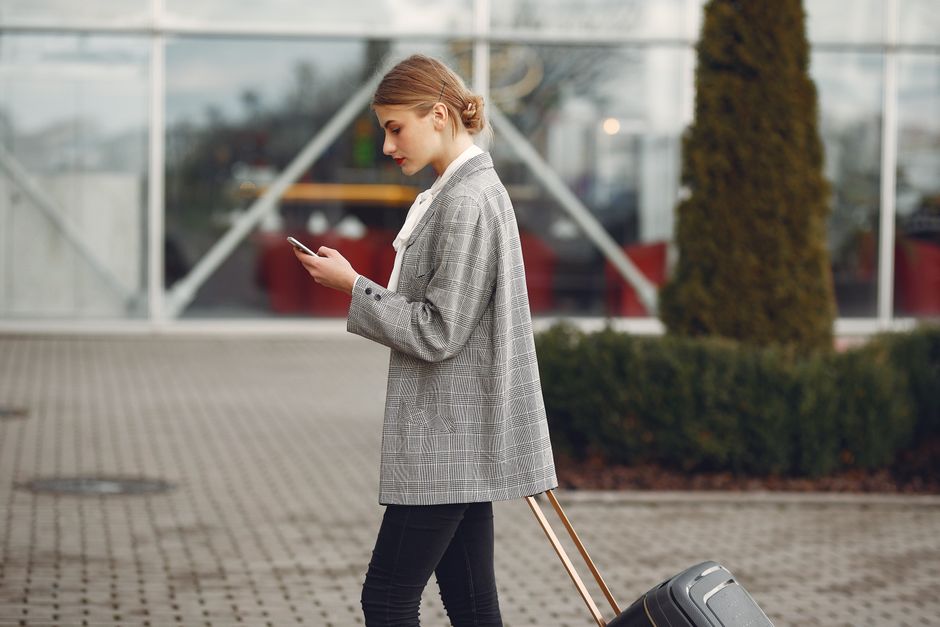
Discharge day is where solo medical tourism goes wrong if you haven’t planned it. You may be tired, in some residual pain, carrying discharge documents, and needing to navigate from the hospital to your accommodation. A few non-negotiable preparations:
Pre-book a medical transport vehicle, not a taxi
For post-surgical discharge (particularly orthopedic, abdominal, or any procedure involving restricted mobility), use a medical transport van rather than a standard taxi or rideshare.
Korea has a regulated medical transport service (의료 차량 이송 서비스); your international coordinator can pre-book for you. These vehicles are equipped for reclined seating and have basic EMT-level support. Do not use Kakao T regular taxis post-general-anesthesia.
Rest period minimum
Korean medical-tourism industry guidelines (aligned with the KHIDI Medical Tourism Facilitator Accreditation standards) recommend solo international patients plan a minimum of two nights’ post-discharge accommodation before any domestic travel (e.g., a day trip to Gyeongju) and five nights before international departure.
These are minimums, not recommendations for everyone; your surgical team will give procedure-specific guidance.
Telemedicine follow-up pre-arranged before you leave
Book your telemedicine follow-up appointment with your hospital’s international department BEFORE discharge. Most KAHF-registered hospitals now offer Zoom-based follow-up appointments with their international coordinators; fees are typically KRW 30,000-50,000 (approx. USD 22-37) per session.
Severance and Samsung both offer formal post-discharge telemedicine programs for international patients. Get the scheduling link and any required pre-appointment documentation (wound photos, prescription list) before you step out of the hospital building.
Financial Considerations for Solo Travelers
As a solo traveler, you have no companion to split accommodation costs, no extra person to cover the “partner” deposit some clinics require for anesthesia procedures, and no one to carry backup payment if your primary card fails.
Bring at minimum two independent payment methods: a Visa/Mastercard debit and a backup credit card from a different bank. Some Korean hospital billing desks still have friction with certain African and Middle Eastern bank-issued cards (not common but it happens); having two cards from different issuers eliminates this risk.
Korean hospitals operating under the Medical Korea program are legally required to provide itemized bills in English on request.
As a solo patient, request the itemized bill on the day before discharge — not on discharge day itself, when you’ll have other things to manage. Check that every line item matches what was discussed in your treatment plan quote.
Korea’s VAT refund for medical services applies in specific circumstances (cosmetic procedures have different VAT treatment than diagnostic and therapeutic procedures); your international coordinator can clarify eligibility. The Korean Tax Service’s tourist tax refund desks at Incheon International Airport handle cash refunds for eligible medical expenses.
Resources Specific to Solo International Patients in Korea
- MOHW Medical Tourism Support Center (medicalkorea.or.kr): English-language helpline (+82-1577-7129, Mon-Fri 9am-6pm KST) for patient rights, complaints, and disputes with medical facilities. Solo patients should save this number.
- Korea Tourism Organization Medical Tourism Desk: At Incheon Airport, Level 1 Arrival Hall. Not just for tour packages — they can help with accommodation referrals and emergency translation.
- Hospital support: For pre-arrival logistics, quotes, and in-country support throughout the patient journey, speak with the hospital’s international patient center before departure. Ask the international patient center whether it can arrange airport pickup, medical transport, and interpreter support, and who your in-country point of contact will be throughout your stay.
The Bottom Line
Traveling alone for medical treatment in Korea is realistic if you treat the logistics as a patient-safety issue rather than a travel convenience.
The three things that go wrong for solo patients: discharge without pre-booked transport, no post-procedure accommodation with flexibility on checkout, and no follow-up appointment locked in before departure.
Get those three right and the rest — Korea’s hospital infrastructure, international coordinator system, and medical-tourism-ready city ecosystem — does most of the work.
If you are planning a solo medical trip to Korea, start by asking the hospital’s international patient center about logistics. KmedTour’s free guides can help you plan an itinerary that works for one.