
- You don’t speak Korean
- Here is what those first 48 hours actually look like, and how to move through them without wasted hours or expensive panic decisions
- If you hold a C-3-3 medical tourism visa, have your hospital invitation letter printed or downloaded offline — immigration officers occasionally ask to see it
Category: Patient Guides | Estimated read: 8 min
The flight lands at Incheon International Airport (ICN) at 6:30 in the morning.
You have a consultation booked at Severance Hospital in Sinchon at 2:00 PM — which means you have seven hours to get from Terminal 1 to a room, shower, eat something, and present yourself coherent enough to discuss surgery with a Korean plastic surgeon.
You don’t speak Korean. The hospital’s international patient center (IHC) won’t open until 9:00 AM, and nobody told you the AREX Express train to Seoul Station takes 43 minutes, not 20.
This is the moment most medical tourism platforms skip. They publish procedure price tables and hospital rankings. They do not tell you that the gap between landing and care is where international patients lose confidence — or lose time they didn’t budget for.
Here is what those first 48 hours actually look like, and how to move through them without wasted hours or expensive panic decisions.
The Airport: First 60 Minutes
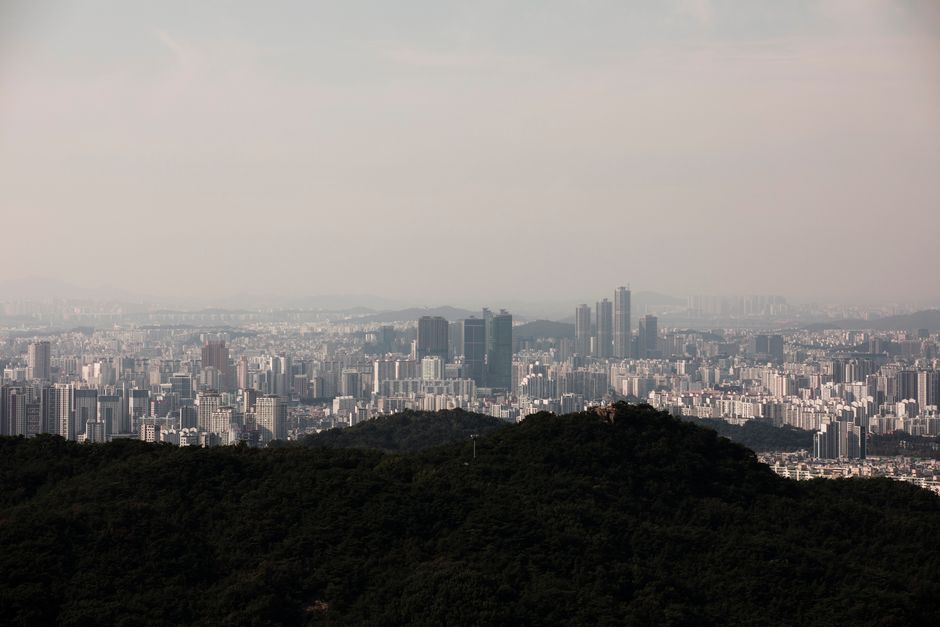
Immigration and customs at ICN typically adds 30–90 minutes on peak arrival days (Korean Air and Asiana early-morning banks from Southeast Asia and the Middle East concentrate between 6:00 and 8:00 AM).
If you hold a C-3-3 medical tourism visa, have your hospital invitation letter printed or downloaded offline — immigration officers occasionally ask to see it.
Your first priority after baggage claim is a SIM card or eSIM, not transport. The KT Roaming Center and SK Telecom counters in both Terminal 1 and Terminal 2 arrivals sell 30-day tourist SIMs for KRW 30,000–55,000 (roughly USD 22–40 depending on data tier).
Do not rely on your home carrier roaming for navigation, appointment confirmations, or translation apps — roaming charges in Korea are real and the connection quality through a foreign carrier on Korean networks is worse than a local SIM.
The Korea Tourism Organization (KTO) maintains a 24-hour tourism information desk in ICN Terminal 1 arrivals (exit 5). For medical tourists specifically, they can print basic district maps and confirm T-money card locations.
T-money is the prepaid transit card that works on buses, metro, and most convenience stores — load KRW 30,000–50,000 as a starting balance. Available at the GS25 and CU convenience stores inside arrivals, as well as at every Seoul Metro ticketing machine.
Transport: AREX vs. Limousine Bus vs. Taxi
The three options from ICN to central Seoul are: the AREX (Airport Railroad Express), limousine buses, or taxi/ride-share. They are not interchangeable depending on where your hospital is.
AREX Express (all-stop or express): KRW 9,500 (express) to Seoul Station. Runs every 5–10 minutes. Fast, reliable, no traffic. Connects to Seoul Metro Lines 1, 2, 4, KORAIL at Seoul Station. Best for patients heading to Mapo, Jung-gu, or Yongsan.
Airport Limousine Bus: KRW 17,000–22,000. Runs directly to specific hotel clusters — Gangnam, Hongdae, Itaewon, Dongdaemun.
If your hospital is near Gangnam (Gangnam Severance, Asan Medical Center, Samsung Medical Center), the 6701 or 6103 routes drop you within walking distance of most accommodation in that district. Takes 60–90 minutes with traffic; longer during the 7:00–9:00 AM congestion window.
KakaoTaxi or TADA: The ride-share apps work in English. ICN to Gangnam in a regular sedan runs KRW 65,000–85,000 depending on the exact destination and time of day.
Surge pricing applies during peak hours. If you are recovering post-procedure and cannot manage transit with luggage, taxi is the correct choice — it is not extravagant.
What the hospital’s IHC won’t always specify: most hospital international patient centers are in Gangnam or south of the river (Asan, Samsung, Gangnam Severance, SNUBH in Bundang).
If you book accommodation near Hongdae or Myeongdong because prices are cheaper, budget 40–60 minutes of transit each direction. That adds up fast over multiple consultation and procedure days.
Accommodation: Proximity Beats Price
Korean hospital districts cluster into three zones for international medical tourists:
Sinchon / Mapo (northwest Seoul): Near Severance Hospital (Yonsei University Health System), Ewha Womans Medical Center. Hotels in this area run KRW 80,000–150,000/night for a standard room.
The Severance IHC specifically maintains a preferred accommodation list on their foreign patient portal (severance.or.kr/eng) — it includes serviced apartments with cooking facilities, which matter for patients on post-procedure dietary restrictions.
Gangnam / Seocho: Near Samsung Medical Center, Asan Medical Center’s outpatient clinics, Gangnam Severance. Premium hotel pricing — KRW 150,000–300,000/night. Serviced residences around Apgujeong and Dogok offer lower daily rates for stays over 7 days, which is relevant for surgical patients who need recovery time before flying home.
Jongno / Jung-gu (central Seoul): Midpoint between the two zones; good access to Seoul National University Hospital (SNUH) via Line 3, Chung-Ang University Hospital, and Kyung Hee University Medical Center via Dongdaemun.
One booking mistake that costs international patients real money: booking accommodation with a non-refundable rate before your consultation confirms the surgical date. Korean hospitals issue procedure scheduling after a in-person consultation, not before.
Book one or two nights near the hospital to cover the consultation visit, confirm the date, then extend or rebook for the procedure stay.
The Seoul Tourism Organization (STO), which manages inbound medical tourism promotion for the city, maintains a list of accommodation partners familiar with late-booking and stay-extension requests from international medical patients at sto.or.kr/eng.
Language: What the App Won’t Catch
Papago (Naver’s translation app, free) outperforms Google Translate on Korean medical terminology because it was trained on Korean-language data at far greater depth. Download it before you leave home. It has a camera mode for reading printed documents (prescriptions, hospital intake forms).
Every major Korean hospital with an IHC provides interpretation services in English, and most IHCs serving international patient volume offer Chinese, Arabic, Russian, and Mongolian interpretation — either in-person or via phone/tablet relay.
The Korea Health Industry Development Institute (KHIDI), the government body that regulates and promotes medical tourism under the Ministry of Health and Welfare (MOHW), requires registered medical tourism facilities to provide language access services as a condition of registration.
If a hospital’s IHC tells you that interpretation is not available for your language, ask them to engage a KHIDI-registered medical tourism coordinator instead.
What the apps and the IHC both struggle with: informal communication. Nursing staff on wards outside the IHC often communicate only in Korean.
If you are admitted for an inpatient procedure, bring a printout of key phrases (pain scale communication, dietary restrictions, allergy alerts, emergency contact information) in Korean. Consider preparing a card for this yourself.
The First 24 Hours Post-Arrival Checklist
Before your consultation, and before any clinical interaction:
-
Locate the hospital’s International Patient Center physically. IHC entrances are rarely the same as the main hospital entrance. Most are in a dedicated wing with separate check-in.
At Samsung Medical Center (SMC), the foreign patient center is on the ground floor of the Supportive Care Center building — a 5-minute walk from the main entrance.
At Asan Medical Center, the Asan International Healthcare Center is in the International Medical Center Building, adjacent to the main clinical building. Arriving late to a consultation because you went to the wrong entrance is the most common and most avoidable first-day problem.
-
Confirm your payment method. Korean hospitals require a deposit or prepayment before elective procedures. Wire transfer is accepted at every major hospital IHC; Visa and Mastercard credit cards are accepted in most cases.
American Express has inconsistent acceptance outside of the hospital’s main billing counter. Bring a credit card with no foreign transaction fee and a backup card. Do not count on Apple Pay or Google Pay at hospital billing windows — acceptance rates are lower than in commercial retail.
-
Register your documents at the IHC first. The IHC will handle your patient registration, interpreter assignment, and consultation appointment confirmation. Attempting to register through the general patient desk first — as most first-time visitors do — adds 30–60 minutes and sometimes results in the case being routed incorrectly.
-
Know your emergency escalation path. The national medical emergency number in Korea is 119 (ambulance and fire). For a non-emergency but urgent health concern during your stay, the KHIDI-operated Medical Korea Helpline (1588-2745) operates in multiple languages and can coordinate referral or translation support.
What Happens After Your Consultation
Most international patients do not leave with a booked surgery date after the first consultation. The consulting physician typically issues a treatment recommendation and refers the case to the hospital’s scheduling and billing team.
The IHC coordinator then produces a cost estimate document (진료비 안내서) — an itemized list that covers surgical fees, anesthesia, room type, and nursing days. Review this document line by line with your interpreter present.
The estimate is not a price guarantee. Korean hospitals are legally required to issue itemized estimates under the Medical Service Act, but final billing can vary by 10–20% if intraoperative findings change the procedure scope.
Ask your IHC coordinator explicitly whether the quoted procedure fee is inclusive of revision or complication management within a specified period. The answer differs significantly by hospital, specialty, and surgeon. It is a question worth asking before you sign a consent form.
This is the operator-grade gap in most medical tourism marketing: the content tells you what things cost in ranges, but not how the billing process actually works under pressure.
The hospital’s IHC should be able to walk you through the billing terms line by line before your procedure date is locked.
Practical Reference: Key Numbers and Resources
| Resource | Contact | Notes |
|---|---|---|
| Medical Korea Helpline (KHIDI) | 1588-2745 | Multi-language; medical tourism coordination support |
| Emergency (ambulance) | 119 | Korea-wide |
| Seoul Tourism Organization (STO) | sto.or.kr/eng | Accommodation referrals, city info for medical visitors |
| Korea Tourism Organization (KTO) | visitkorea.or.kr | Airport info desks; general tourism support |
| AREX (Airport Rail) | arex.or.kr/eng | Train schedules and ticketing from ICN |
| KakaoTaxi (app) | Available iOS / Android | English interface; most reliable ride-share option |
All hospital-specific IHC locations, transport fares, and contact numbers are accurate as of 2026 and subject to change. Verify directly with your hospital’s international patient center before travel. This guide does not constitute medical advice. For procedure-specific guidance, consult the hospital’s international patient center and your treating physician.