
- What you do not know — and what most foreign patient resources do not tell you — is how to get a real cost estimate and a remote consultation without booking a flight first
- This is the question that stalls more medical travel decisions than any other
- Here is exactly how the Korean hospital remote consultation process works — including what the hospitals actually respond to, what they need from you, and the realistic timelines
Category: Patient Planning | Audience: International patients in Africa, GCC, Southeast Asia | ~1,450 words
You have done the research. You know you want rhinoplasty at a clinic in Gangnam, or a cardiac workup at one of Seoul’s university hospitals, or a fertility cycle at a specialized IVF center in Mapo.
What you do not know — and what most foreign patient resources do not tell you — is how to get a real cost estimate and a remote consultation without booking a flight first.
This is the question that stalls more medical travel decisions than any other. “I cannot commit to a trip without knowing what it will cost.” And it is a reasonable position.
A return flight from Lagos, Nairobi, or Dubai to Incheon costs between $600 and $1,200. Adding three nights in Seoul before a consultation you could have done over video is money most patients cannot afford to waste.
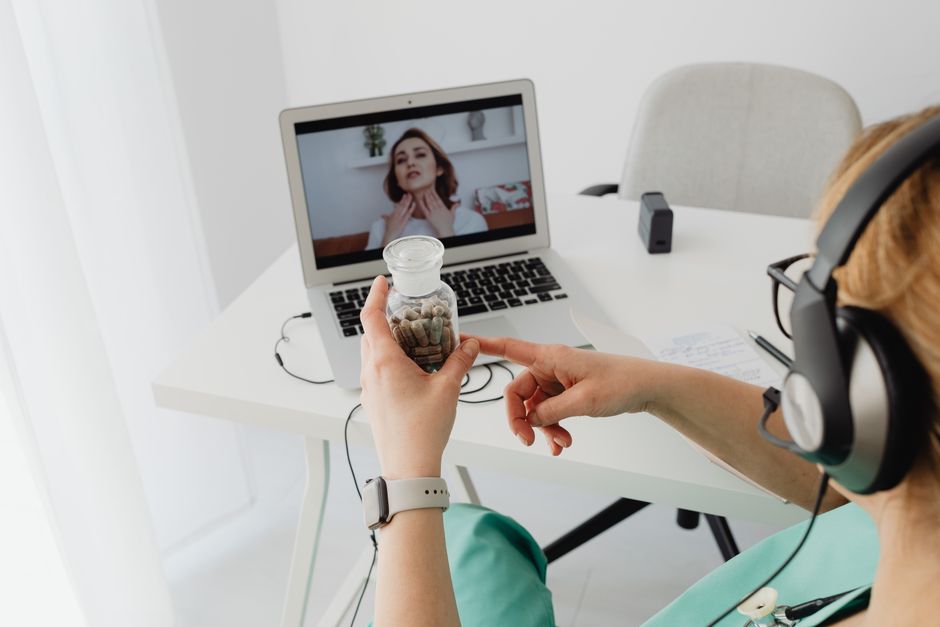
Here is exactly how the Korean hospital remote consultation process works — including what the hospitals actually respond to, what they need from you, and the realistic timelines.
What Korean Hospitals Mean by “Pre-Consultation” (사전상담)

Korean public and private hospitals distinguish between a 사전상담 (pre-consultation) — a remote, non-binding information exchange — and a 진료 (clinical examination), which requires physical presence. For international patients, you are entitled to request the first category before any travel commitment.
The Korea Health Industry Development Institute (KHIDI), the government body that administers the Korean Medical Tourism Support Centre (medicalkorea.or.kr), explicitly designates pre-consultation support as part of the international patient pathway for registered hospitals.
KOIHA-accredited hospitals (Korea International Healthcare Accreditation) are required to have an international patient department (국제진료센터) capable of handling these requests.
What this means practically: you are not asking for a favor. You are using a structured pathway that major hospitals have built for exactly this purpose.
The Three Documents Korean Hospitals Need (and What Happens Without Them)
Every major hospital’s international patient center will ask for the same three things before giving you a cost estimate:
1. A referral letter or medical summary from your current doctor
This does not need to be long. A one-page letter from your GP or specialist stating your diagnosis, current medications, and the reason for seeking treatment in Korea is sufficient.
If you do not have a specialist, most international patient centers will accept a self-prepared health summary for cosmetic or elective procedures.
2. Recent relevant investigations
Blood panels, imaging (CT, MRI, ultrasound), pathology reports, or any diagnostic results from the past 12 months. Samsung Medical Center’s International Cancer Center, for example, asks for imaging CDs or DICOM files — not just printed reports — for oncology second opinions.
Asan Medical Center (Seoul), the largest hospital in South Korea with 2,700 inpatient beds, requires uploaded files via its MyHealth Records portal for cardiology and oncology queries.
3. Your treatment request in writing
Be specific. “I want a rhinoplasty” is not enough. Write: “I am seeking a primary closed rhinoplasty to address a dorsal hump and bulbous tip.
I am 32, no prior surgeries, no medical conditions.” The more specific your request, the faster the department can route it to the right consultant and provide a meaningful cost estimate rather than a vague range.
Without all three, hospitals default to their widest possible price range — or decline to quote entirely. This is the most common reason patients receive unhelpful responses like “the cost depends on many factors.”
How to Submit: Channels That Actually Get Responses
Email to the International Patient Department
Every KOIHA-registered hospital publishes an international patient email. Response times vary significantly:
- Seoul National University Hospital (SNUH) International Healthcare Center: typically 3–5 business days for an initial acknowledgment, 7–10 for a quote with supporting documents
- Asan Medical Center International Care Center: 3–5 business days
- Samsung Medical Center International Cancer Center: 2–3 business days for oncology (a priority department); 5–7 for other specialties
- Gangnam-based plastic surgery clinics: 24–48 hours for cosmetic queries (high volume, systematized) — but responses are often templated ranges, not individualized quotes
The Korea Medical Tourism Association (KMTA) Facilitation Service
KMTA (kmta.or.kr) operates a free facilitation service that routes patient inquiries to registered member hospitals.
If you are unsure which hospital is best suited for your case, submitting through KMTA allows them to match you to 2–3 providers and coordinate responses on your behalf. Turnaround is typically 5–7 business days.
Submitting Directly to Hospitals
Submit your anonymized health summary to each shortlisted hospital’s international patient center yourself, then compare the responses side by side, including costs and estimated length of stay.
What a Real Quote Looks Like (and What It Doesn’t Include)
Korean hospitals provide cost estimates in Korean Won (KRW). At the time of writing (mid-2026), 1 USD ≈ 1,380 KRW. Always confirm the current rate; the Won has moved 8–12% against the dollar in 12-month windows.
A typical written quote from a KOIHA-registered hospital international department will include:
- Estimated procedure or surgery cost range (not a fixed price — final cost depends on intraoperative findings)
- Estimated anesthesia and operating room fees (often listed separately)
- Estimated hospitalization cost per day (for inpatient procedures)
- Department or surgeon name (not always; some hospitals quote by department, not individual surgeon)
- A validity period — usually 30 to 90 days
What is almost never included in the initial quote:
- Post-discharge medication costs (typically KRW 30,000–80,000 per prescription fill at hospital pharmacies)
- Interpreter service fees (KRW 50,000–150,000 per session at most large hospitals — Asan and SNUH have free Arabic and English services for certain departments; confirm in advance)
- Administrative fee for the international patient center service (usually waived for inpatients; KRW 50,000–100,000 for outpatient-only visits at some centers)
These are not hidden fees — hospitals will tell you when you ask — but patients who do not ask often encounter them for the first time on discharge.
Timing: When to Request a Pre-Consultation
The practical minimum lead time between submitting your documents and arriving in Korea is six weeks for elective procedures, and eight to twelve weeks for anything requiring specialist scheduling (major oncology consultations, complex orthopedics, multi-stage cosmetic procedures). This accounts for:
- Document preparation and translation if required (KHIDI recommends all records be translated into Korean or English — most major hospitals’ international departments accept English)
- Hospital response and quote turnaround
- Medical visa application: C-3-3 (short-stay, up to 90 days) typically processes in 3–5 business days at Korean embassies in GCC countries and 7–10 days in sub-Saharan Africa; G-1-10 (long-stay, over 90 days) requires a hospital appointment letter (진단서 발급예정 확인서)
- Flight and accommodation booking
Starting the process fewer than four weeks before your target arrival date significantly increases the risk that you arrive before you have a confirmed treatment plan, cost estimate, or visa.
One Thing That Will Save You Considerable Frustration
When hospitals respond with a cost range instead of a number, do not interpret it as evasiveness. “Between KRW 3,500,000 and KRW 8,000,000” for rhinoplasty is an honest answer — the spread reflects real variability in operative complexity, not price-gouging.
The only way to narrow it is to provide imaging (nasal x-ray or CT) and a video consultation with the surgeon.
Most Gangnam plastic surgery clinics will do a free 15–20 minute video consultation before quoting. For surgical specialties at general hospitals, some charge a remote consultation fee (typically KRW 50,000–100,000, credited toward your treatment cost if you proceed). Ask explicitly when you first contact the international department.
Summary Checklist
Before you request a remote consultation or quote:
- [ ] One-page medical summary or referral letter (in English)
- [ ] Relevant investigations from the last 12 months (digital files preferred)
- [ ] Specific written treatment request (procedure type, your health context, approximate dates)
- [ ] Target arrival window and approximate budget range
- [ ] Passport copy (some hospital intake forms require it for identity verification)
Allow 6–8 weeks minimum from first contact to arrival for elective procedures.
KmedTour’s free guides explain how to contact Korean hospitals registered with KOIHA and supported by KHIDI’s Medical Tourism Support Programme. KmedTour is an information resource only. To find registered hospitals and facilitators, use the Medical Korea portal: https://www.medicalkorea.or.kr.