
- Understanding what Hanbang actually is — and what it isn’t — matters before you book anything
- Ask the hospital’s international patient center to brief you in advance if your post-procedure schedule involves appearances or travel where this would be inconvenient
- A first visit to a Korean medicine clinic runs 45–90 minutes
Most international patients arrive in Korea with a specific biomedical procedure in mind — a rhinoplasty, a knee replacement, an executive health checkup. But a growing minority come specifically for Hanbang: traditional Korean medicine.
And an even larger group discovers it mid-trip, when a hospital coordinator recommends an acupuncture session to manage post-operative pain or a herbal decoction to support recovery from chemotherapy.
Understanding what Hanbang actually is — and what it isn’t — matters before you book anything.
Hanbang Is Not the Same as Traditional Chinese Medicine

This is the most common misunderstanding, and Korean medicine practitioners find it genuinely frustrating. While both systems share ancient East Asian roots, Hanbang developed its own theoretical framework, diagnostic traditions, and pharmacopoeia over several centuries.
The term itself is Korean (한방, literally “Korean method”), and its practice in Korea is governed by the Korean Medical Service Act — a separate licensing regime from conventional (양방, yangbang) Western medicine.
A Korean Medicine Doctor (KMD, 한의사) completes a six-year university program accredited by the Korean Institute of Oriental Medicine (KIOM), the national research body established in 1994 under the Ministry of Health and Welfare.
KIOM maintains the evidence base for 360+ recognized herbal formulas and publishes clinical outcome data that the Ministry uses to determine national health insurance coverage — a significant difference from countries where traditional medicine exists in a regulatory gray zone.
In practical terms: when you see a KMD at a licensed Korean medicine clinic (한의원, hanuiwon), you are seeing a government-licensed clinician whose prescriptions are tracked in the same national health information system as conventional hospital records.
The Four Core Treatment Modalities
Acupuncture (침, chim): Korea’s evidence base for acupuncture is unusually strong by international standards. The 2023 KIOM clinical registry — covering 47 hospitals and clinics participating in the Korean Medicine Data Center — documented over 180,000 acupuncture sessions, with outcomes tracked for musculoskeletal pain, stroke rehabilitation, and functional gastrointestinal disorders.
For international patients, acupuncture is the most accessible entry point: minimal language barrier, non-invasive, and increasingly integrated into the post-operative pain management protocols at major hospitals.
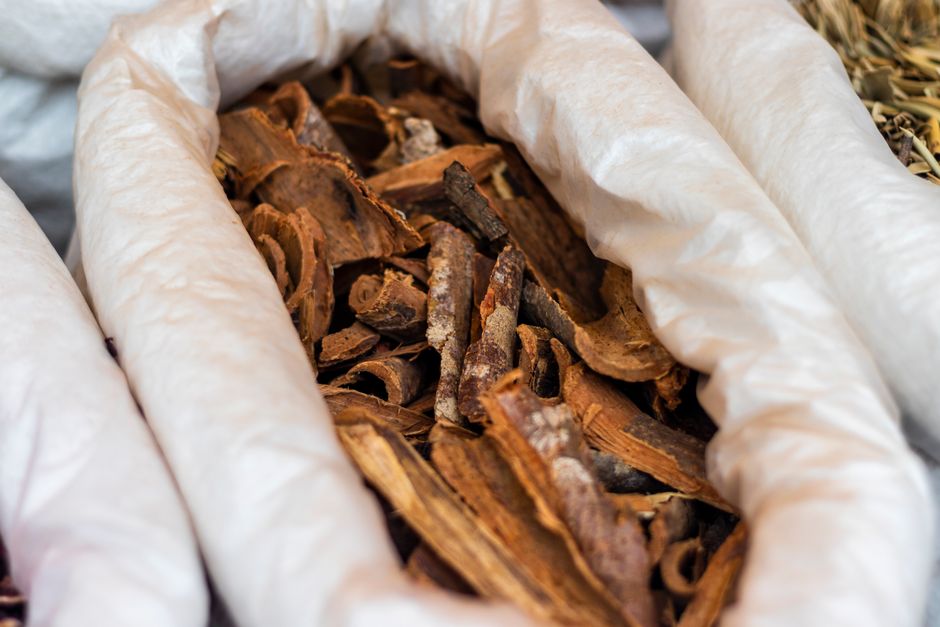
Herbal Medicine (한약, hanyak): Prescribed as decoctions (boiled extracts), granules, or standardized tablets. The KIOM maintains a pharmacopoeia of 300+ substances with defined safety profiles. What matters for international patients: herbal prescriptions are not generic.
A KMD will take a detailed intake covering your constitution type (sasang, one of four constitutional archetypes), current medications, and treatment goals before prescribing.
If you’re on blood thinners, cardiac medications, or immunosuppressants, disclose this — several herbal formulas interact with these drug classes, and a licensed KMD is trained to screen for these interactions in ways a wellness spa is not.
Moxibustion (뜸, tteum): Heat applied via burning mugwort (Artemisia argyi) at specific acupoints. Used primarily for chronic fatigue, digestive complaints, and cold-type constitutional patterns. Most international patients encounter it as a complement to acupuncture, not as a standalone treatment.
Cupping (부항, buhang): Both dry and wet cupping are practiced. The circular bruising it leaves is temporary (typically 5–10 days) and widely misunderstood — international patients are sometimes alarmed post-session.
Ask the hospital’s international patient center to brief you in advance if your post-procedure schedule involves appearances or travel where this would be inconvenient.
What the Intake Process Actually Looks Like
A first visit to a Korean medicine clinic runs 45–90 minutes.
The KMD will conduct a pulse diagnosis (맥진) at three positions on each wrist, examine your tongue, and take a structured history that covers sleep patterns, digestive function, thermal sensitivity, and emotional state — elements largely absent from a conventional medical intake.
For international patients at hospitals with dedicated international centers, an interpreter is usually available for this intake. At standalone clinics (한의원), the situation is more variable. Ask the clinic in advance whether an English-speaking KMD or medical interpreter will be available for your appointment.
Expect to pay between ₩30,000–₩80,000 (approximately $22–$58 USD) for an initial acupuncture session at a clinic; herbal medicine prescriptions run ₩50,000–₩200,000 per two-week course depending on the formula.
Some services are covered under Korean National Health Insurance for Korean residents, but international patients on tourist or medical visas are not covered — expect to pay out of pocket and retain receipts for potential reimbursement under travel health insurance (coverage varies widely by policy; check explicitly for “traditional medicine” coverage).
Integration with Conventional Treatment at Korean Hospitals
Kyung Hee University Medical Center in Seoul’s Dongdaemun district is the most prominent example of formal integrative medicine in Korea. It operates both a conventional university hospital and the Kyung Hee University Korean Medicine Hospital on the same campus, with structured referral protocols between the two.
Oncology patients undergoing chemotherapy at the conventional hospital can be referred to KMD colleagues for nausea management and fatigue support — documented in shared records, not as separate siloed experiences.
Seoul National University Hospital (SNUH) runs an integrative medicine outpatient clinic where conventional physicians and KMDs jointly manage complex chronic cases. Referrals to this clinic from SNUH attending physicians take priority over direct self-referrals for international patients.
For patients combining a surgical procedure with traditional medicine support, the sequencing matters: most KMDs recommend completing any anesthesia-involving procedures before beginning herbal prescriptions, as some formulas affect hepatic enzyme activity relevant to anesthetic metabolism.
Your hospital’s international patient coordinator and your KMD should communicate directly — ask the hospital to set this up.
Who Travels Specifically for Hanbang
Three distinct patient profiles show up consistently:
Chronic pain patients: Individuals with long-standing musculoskeletal conditions — lumbar disc disease, osteoarthritis, fibromyalgia — who have exhausted conventional options at home and want an evidence-based alternative without surgery.
Korea’s network of licensed KMDs is denser than in almost any other country: there are approximately 25,000 licensed KMDs in Korea as of 2025 (Korean Ministry of Health and Welfare licensing data), giving patients real choice of practitioner rather than the lottery of finding one of a handful in a Western country.
Fertility patients: Acupuncture as a complement to IVF is one of the better-studied intersections of Korean medicine and conventional care. Several Korean fertility clinics — including those in Seoul’s Gangnam district — offer coordinated IVF + Korean medicine programs where the acupuncture schedule is aligned with the stimulation and retrieval protocol.
Post-cancer recovery: Patients completing primary cancer treatment abroad sometimes come to Korea for a structured recovery period combining conventional rehabilitation with Korean medicine support for fatigue, appetite restoration, and immune function. KIOM’s Cancer Support Research Center has published outcomes data on this patient group since 2019.
What to Verify Before Booking
The quality gap in Korean traditional medicine, like in any field, is real. When assessing a clinic:
- License: Confirm the practitioner holds a KMD license (한의사 면허증), not just a “wellness practitioner” certification. The Korean Health Personnel Licensing Examination Board maintains a public lookup.
- KHIDI registration: For international patients specifically, KHIDI (Korea Health Industry Development Institute) maintains a list of Korean medicine facilities that have registered as medical tourism providers. This isn’t mandatory for all clinics, but it indicates some orientation toward international patient needs.
- Integration with your primary care plan: If you’re combining Korean medicine with a surgical or oncological treatment at a major hospital, confirm the hospital’s international patient center is aware of both tracks.
What to avoid: any clinic offering to treat diagnosed conditions (cancer, heart disease, diabetes) with herbal medicine alone, without coordination with your treating physician. A responsible KMD will always position Hanbang as complementary, not primary, for serious pathology.
Practical Coordination Notes for International Patients
- Timing: Build at least 2–3 days of acclimatization before starting any Korean medicine treatment if you’ve been traveling across significant time zones. Both jet lag and the physical stress of long-haul travel affect the constitutional readings KMDs use.
- Medication list: Bring a complete current medication list in English. A KMD cannot safely prescribe without it.
- Receipt documentation: Korean medicine clinics issue itemized receipts (영수증) by treatment code. Keep these for insurance claims.
- Allergies and dietary restrictions: Several herbal formulas contain animal-derived substances. If you are vegetarian, vegan, or have animal product allergies, state this explicitly at intake.
Ask each clinic whether it has English-speaking KMDs and interpreter services, and tell your main hospital’s international patient center about any Korean medicine visits so they fit your schedule. If Hanbang is part of your treatment plan, include it in your initial intake questionnaire so the coordination happens before you arrive, not after.
This article describes Korean Traditional Medicine (Hanbang) in a general educational context. It is not medical advice. Consult your primary physician and a licensed Korean Medicine Doctor before beginning any traditional medicine treatment, particularly if you are managing an active medical condition or taking prescription medications.