
- This is a practical district guide for international patients who have already decided to travel to Korea for treatment
- It is about what to expect from each neighborhood when you land, check into your recovery apartment, and begin navigating a city where you probably don’t speak the language
- Korea’s healthcare system concentrates specialist capacity at a small number of large, urban academic medical centers
Most articles about Korean medical tourism describe Seoul generically: world-class hospitals, competitive prices, K-beauty clinics on every corner.
What they rarely tell you is that Seoul’s medical infrastructure is concentrated in three distinct geographic clusters — and which cluster you choose will determine your commute times, hotel costs, interpreter access, and recovery comfort in ways no procedure comparison chart will capture.
This is a practical district guide for international patients who have already decided to travel to Korea for treatment. It is not about which hospital to choose.
It is about what to expect from each neighborhood when you land, check into your recovery apartment, and begin navigating a city where you probably don’t speak the language.
Why Seoul’s Medical Clusters Exist
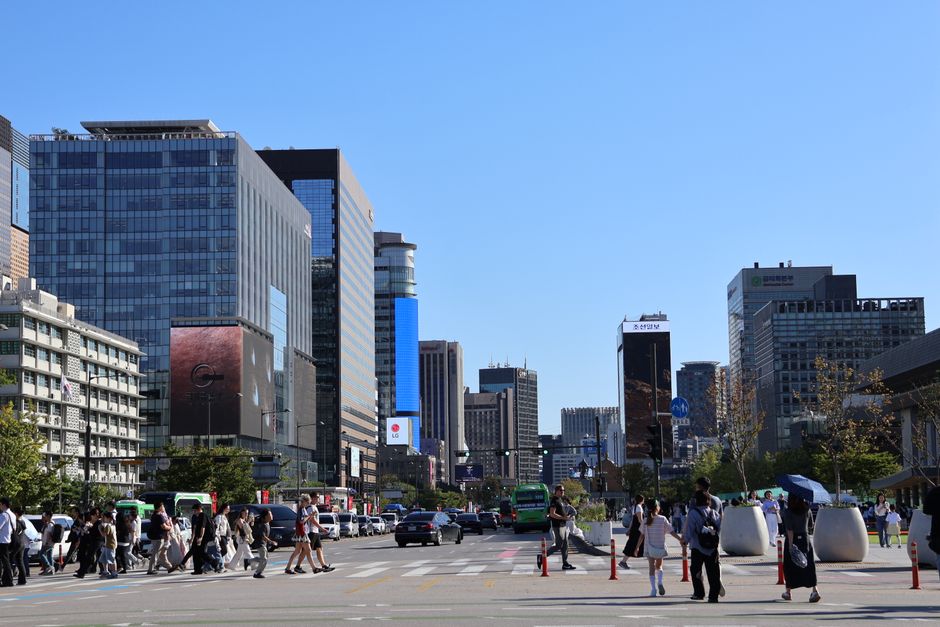
Korea’s healthcare system concentrates specialist capacity at a small number of large, urban academic medical centers. Three subway corridors anchor Seoul’s medical geography:
Gangnam (Line 2 / Line 9, Sinnonhyeon–Apgujeong corridor): The highest density of cosmetic surgery clinics in the world, anchored by Samsung Medical Center’s main campus (Irwon, Gangnam-gu) and a concentration of dermatology, dental, and ophthalmology outpatient clinics in the Cheongdam and Apgujeong neighborhoods.
Sinchon–Hongje (Line 2, Sinchon station): Yonsei University Severance Hospital — one of Korea’s two original JCI-accredited hospitals — sits a 10-minute walk from Sinchon station. This corridor also serves Ewha Womans University Mokdong Hospital and is Seoul’s main hub for oncology, transplant, and complex cardiac cases that require prolonged inpatient stays.
Jongno–Daehangno (Lines 1, 3, and 4, Jongno 3-ga and Hyehwa corridors): Seoul National University Hospital (SNUH), Korea’s flagship government-affiliated academic medical center, sits at the northern edge of this corridor near Hyehwa station.
Asan Medical Center — the country’s largest hospital by bed count and outpatient volume — is a 20-minute taxi ride east in Songpa-gu, but is often grouped with this corridor for itinerary planning purposes.
Understanding these three clusters is the first thing to settle when putting together your logistics plan. Cluster choice often matters more than the hospital ranking.
Gangnam: When to Choose This District
Best for: Outpatient cosmetic procedures, LASIK and other refractive eye surgery, dental implants and veneers, dermatology, short-stay wellness treatments.
Hospitals and clinics: Samsung Medical Center (Gangnam campus, Irwon), Gangnam Severance Hospital (Eonju, separate from Sinchon Severance), Banobagi Plastic Surgery, Dream Plastic Surgery, Deesse Plastic Surgery, Shinhan Dental Clinic, B&A Clinic.
What patients don’t expect: Gangnam’s medical-grade clinics (as opposed to the glitzy cosmetic surgery towers near Apgujeong Rodeo) are spread across a 6km² area with no single walkable medical row.
Samsung Medical Center is in Irwon, a residential neighborhood, not in the entertainment strip. Patients who book hotels in Gangnam’s Yeoksam or Apgujeong areas because “they’re close to Samsung” find themselves a 20-minute taxi ride from their actual hospital.
Practical logistics: Samsung Medical Center’s International Cancer Center and Samsung Oncology Outpatient building have dedicated international-patient coordinators on the B1 and 1F floors who speak English, Mandarin, Arabic, and Russian.
Walk-in interpretation is not available — appointments are pre-booked through the international office (smc.samsung.co.kr/english). Visa letter requests typically take 3–5 business days from the international office.
Accommodation tip: For Gangnam patients, the area near Irwon station (Line 3) keeps you a 5-minute walk from Samsung Medical Center’s main building. The Mapo–Hongdae corridor (30–40 min by subway) is cheaper and may suit patients doing 2+ week recovery stays who want livability over convenience.
Sinchon: When to Choose This District
Best for: Complex oncology (Yonsei Cancer Center), cardiac surgery and long-term inpatient care, neurology, organ transplant follow-up, pediatric cases.
Hospitals: Yonsei University Severance Hospital (the flagship, not Gangnam Severance — these are distinct institutions), Ewha Womans University Mokdong Hospital (Yangcheon-gu, 20 minutes west), Yonsei University Dental Hospital (on-campus, one of Korea’s highest-volume dental academic centers).
What patients don’t expect: Severance operates one of Korea’s most established international health centers, with a separate entrance, dedicated admission desk, and in-house interpretation in 13 languages.
The international office (yonsei.ac.kr/international) handles quote requests, C-3-3 medical visa invitation letters, and pre-arrival medical record review — often faster than Asan or SNUH for first-touch inquiries (response typically 2–3 business days for a standard oncology or cardiology case).
The Sinchon neighborhood itself is a university district — affordable food, late-night pharmacies, and apartment-hotel stock within walking distance. For families accompanying a patient through a multi-week admission, Sinchon has a higher density of furnished short-term rental apartments than Gangnam at 30–40% lower daily rates.
Practical logistics: Sinchon station exits 3 and 5 put you at Severance’s west wing in under 5 minutes on foot. For inpatient admissions, the international office can coordinate airport pickup through vetted medical transport partners — confirm this when submitting your appointment request, not on arrival day.
Jongno and the SNUH/Asan Corridor: When to Choose This District
Best for: Government-sponsored medical tourism program patients (MOHW-affiliated cases), rare disease consultations, orthopedic surgery, second opinions at a research hospital, cancer cases requiring KOIHA-certified comprehensive treatment.
Hospitals: Seoul National University Hospital (SNUH, Jongno), Seoul National University Bundang Hospital (SNUBH, Bundang — 45 minutes south, separate facility), Asan Medical Center (Songpa-gu, Line 8 Mongchontoseong or taxi from Jamsil).
What patients don’t expect: SNUH is Korea’s most academically prestigious hospital, but its international patient infrastructure has historically lagged behind Severance and Samsung.
The SNUH International Healthcare Center (ihc.snuh.org) handles overseas inquiries, but initial response times for non-urgent cases can run 5–7 business days — budget for this in your pre-trip timeline.
Asan Medical Center, by contrast, has expanded its international program significantly since 2023 and now offers same-day outpatient consultation for patients who pre-book via the Asan Medical International Center (amc.seoul.kr/eng).
KHIDI program note: The Korea Health Industry Development Institute (KHIDI, khidi.or.kr) runs a medical tourism support program that can subsidize interpreter fees and provide a medical concierge for patients who arrive through registered facilitators.
Ask the hospital’s international patient center whether it takes part in the KHIDI program. If your case qualifies (most elective inpatient procedures do), this is worth flagging at intake — it can reduce out-of-pocket interpreter costs by KRW 80,000–120,000 per day.
Practical logistics: Asan’s physical separation from the Jongno/SNUH corridor is a common source of patient confusion. Patients booking hotels near SNUH who then discover their referral is to Asan face a daily 40-minute commute.
If your treatment destination is Asan, the Jamsil neighborhood (Songpa-gu) is the logical accommodation base — not the historic Jongno corridor.
Cross-Cluster Situations: What Happens When Your Care Requires Both
Some care journeys don’t fit neatly into one district. A patient needing a cancer diagnosis confirmed at SNUH, followed by inpatient treatment at Asan, then outpatient recovery monitoring at a Gangnam dermatology clinic, is not an unusual sequence.
Korean hospitals have formal patient-transfer networks under KOIHA standards, and international-patient coordinators at major centers are experienced in facilitating these transitions.
What they need from you: a single point of contact (ask whether the international patient center at your main hospital can serve this role), a signed medical information release covering all facilities, and a realistic 3–4 week minimum planning window before cross-cluster treatment begins.
Patients who show up with a printed PDF from one hospital and ask a second hospital to “take it from here” cause delays that could have been avoided with 48 hours of coordinator work in advance.
Practical Baseline: What Every District Has in Common
All three clusters are accessible from Incheon International Airport on public transit without changing from the AREX express train to a taxi. Door-to-hospital travel time from ICN is 60–90 minutes depending on the cluster.
All major Korean hospital international-patient centers accept bankcards for settlement; the MOHW’s official Medical Korea portal (medicalkorea.or.kr) lists current estimated price ranges for common procedures by facility tier.
Emergency Korean phrase cards (available from KHIDI partner facilitators and from the Medical Korea portal) cover the specific vocabulary a medical tourism patient needs and should be printed before departure, not downloaded on arrival.