
- What “Asian rhinoplasty” actually means: Augmentation rhinoplasty (adding height and definition) rather than the reduction rhinoplasty common in Western practice — Korea performs more of these per capita than any other country
- Material options: Silicone implant ($3,000–$4,500), Gore-Tex ($3,500–$5,000), or autologous cartilage from septum, ear, or rib ($4,500–$7,500) — each with different healing, durability, and revision profiles
- Recovery timeline: Splint off at day 7, return-to-work look at 2–3 weeks, photo-final at 6–8 weeks, full final result at 9–12 months
- Revision rhinoplasty: Korea is one of the world’s leading destinations for revision work — clinics like those described in KmedTour’s guides handle complex secondary cases routinely
Asian rhinoplasty is structurally different from Western rhinoplasty. It addresses different anatomical features, uses different materials, and follows different healing patterns. Surgeons trained primarily in Western practice often deliver suboptimal results on Asian noses because the technique requirements diverge significantly.
This guide explains what Korean Asian rhinoplasty specialists actually do, the material options and their tradeoffs, the recovery timeline you should plan for, and why Korea has become the world’s leading destination for both primary and revision rhinoplasty.
Why Asian Rhinoplasty Is a Different Operation
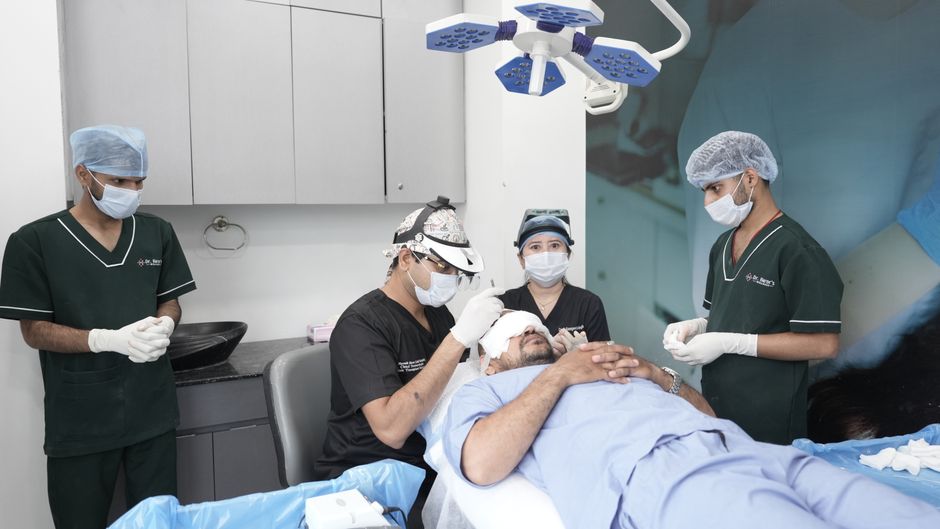
Western rhinoplasty traditionally focuses on reduction — narrowing a wide dorsum, removing a dorsal hump, refining an over-projected tip. Asian rhinoplasty is most often an augmentation operation: adding dorsal height, refining tip projection, narrowing wide alae, and correcting a short nose.
Three anatomical differences drive the technique gap:
Lower dorsal height. Asian noses typically have a flatter dorsum that requires structural augmentation rather than reduction. The surgeon adds material along the bridge rather than removing it.
Weaker tip cartilage. Asian lower lateral cartilages are typically thinner and less structurally robust than Caucasian equivalents. Tip refinement requires graft support rather than purely suturing existing cartilage into shape.
Thicker, more sebaceous skin. Asian nasal skin is on average thicker and has more sebaceous glands. This affects how the final result projects through the skin envelope — subtle work shows less, and post-op swelling resolves more slowly than in thinner skin.
A Korean specialist trained in 200+ Asian rhinoplasties per year develops calibration for these specific variables that a general plastic surgeon performing 30 mixed rhinoplasties per year doesn’t accumulate.
The Material Question: What Goes Inside Your Nose
The biggest cost and outcome variable in Asian rhinoplasty is material selection for the dorsal augmentation. There are three main options, each with distinct long-term profiles.
Silicone Implant (Silastic)
The most common and least expensive option. A pre-shaped or carved silicone implant sits along the dorsum to create height and definition. Procedure cost typically $3,000–$4,500.
Advantages: predictable shape, controlled outcome, shorter operating time, lower cost, no donor site.
Disadvantages: long-term capsular contraction risk (typically appears 5–15 years post-op), visibility through thin skin in some patients, implant shifting, slight increased risk of late-stage infection. Revision rates are higher than autologous options.
Best for: primary rhinoplasty in patients with moderate skin thickness who want a defined outcome at lower cost and accept the long-term revision possibility.
Gore-Tex (Expanded Polytetrafluoroethylene)
A porous synthetic material that tissue ingrows into, creating semi-integration. Costs $3,500–$5,000.
Advantages: softer feel than silicone, lower capsular contraction risk, better for thin-skinned patients, integrates with surrounding tissue.
Disadvantages: harder to remove if revision is needed (tissue integration cuts both ways), slight resorption over years requiring possible touch-up, higher cost than silicone.
Best for: patients with thin skin where silicone implant visibility would be problematic, and patients who prioritize natural feel over the longest-term predictability.
Autologous Cartilage (Your Own Tissue)
The gold-standard option, particularly for revision and complex cases. Cartilage is harvested from your own septum, ear (conchal), or rib (costal) and shaped to augment the dorsum and tip. Cost $4,500–$7,500.
Advantages: no foreign material rejection, lowest long-term complication rate, most natural feel and flexibility, ideal for revision rhinoplasty where previous implant material caused problems.
Disadvantages: donor site (ear or rib has its own small scar and recovery), longer operating time, higher cost, slight cartilage warping risk in rib grafts.
Best for: revision rhinoplasty, patients who want the longest-term outcome regardless of cost, patients with previous silicone/Gore-Tex complications, and patients with significant tip work requirements.
| Material | Cost Range | Long-Term Risk | Best For |
|---|---|---|---|
| Silicone | $3,000–$4,500 | Capsular contraction at 5–15 yrs | Primary, moderate skin, budget |
| Gore-Tex | $3,500–$5,000 | Slow resorption, hard to revise | Thin skin, natural feel |
| Septal cartilage | $4,500–$6,000 | Limited supply, no donor site | Tip refinement, small augmentation |
| Conchal (ear) cartilage | $5,000–$6,500 | Small ear scar, mild warping | Tip + minor dorsum |
| Rib (costal) cartilage | $5,500–$7,500 | Rib donor site, warping risk | Revision, complex augmentation |
The Korean Rhinoplasty Specialties
Primary Rhinoplasty
First-time rhinoplasty addressing the standard concerns: dorsal augmentation, tip refinement, alar narrowing, and septum correction where needed. Recovery timeline is the most predictable here. Most primary patients see substantial improvement at 6–8 weeks and final result at 9–12 months.
Revision Rhinoplasty
Surgery on a nose that’s already had rhinoplasty elsewhere. Korea has become the world’s leading destination for revision work — clinics like Banobagi, ID Hospital, JK Plastic Surgery, and OZ Clinic see 1,000+ revision cases per year combined. The Korean specialty has three drivers:
- Volume — Korean surgeons see more primary cases per career, giving more opportunity to learn from outcomes
- Material expertise — Korean surgeons routinely work with all material types (silicone, Gore-Tex, autologous), so they can address complications from any prior material
- Costal cartilage proficiency — most Korean revision specialists are comfortable harvesting and shaping rib cartilage, which is often necessary for complex revisions
Revision rhinoplasty costs 50–80% more than primary because it’s technically harder and longer in the operating room. Budget $4,500–$9,000 for the procedure itself.
Short Nose Correction
A specialty subset where the nose is structurally short and the columella is retracted. Requires complex grafting to lengthen the nasal framework. One of the most technique-dependent procedures in Korean plastic surgery.
Deviated Septum + Functional Rhinoplasty
Combines septum correction (which improves breathing) with aesthetic rhinoplasty. Korean specialists are well-trained in both functional and aesthetic outcomes — important to ask about this if you have breathing issues alongside aesthetic concerns.
Ethnic Rhinoplasty
Korean specialists increasingly handle ethnic rhinoplasty for patients of African, Middle Eastern, South Asian, and Hispanic background. The technique adjusts for different skin thickness, alar width, and dorsal proportion requirements. When choosing a surgeon, ask specifically about case volume with patients of your background.
“Asian rhinoplasty is fundamentally a construction operation, not a reduction operation. The surgeon is building structure where it isn’t, not removing structure where it is. This requires a different set of materials, techniques, and judgment calls than what a primarily Western-trained surgeon brings to the table.”
Recovery Timeline: Realistic Week-by-Week

| Time | What to Expect |
|---|---|
| Day 0–3 | External splint, internal packing or splints, significant swelling around eyes and cheeks, bruising development |
| Day 4–6 | Internal packing removed (if used). Swelling peaks day 3 then begins reducing. Bruising fading to yellow-green. |
| Day 7 | External splint removed. First clear view of provisional shape. 60–70% of swelling still present. |
| Week 2 | Most bruising resolved. Earliest safe flight window for international patients. Still visibly post-surgical to anyone who knows your face well. |
| Week 3–4 | “Return to work” window for most patients. Looks normal to strangers. Friends notice subtle swelling. |
| Week 6–8 | Photo-final look for most patients. Tip definition still emerging. ~30% residual swelling. |
| Month 3–6 | Tip continues refining. Skin envelope settles. Most assessment of result happens in this window. |
| Month 9–12 | Final stable result. Any revision decisions should wait until at least the 12-month mark. |
Thicker-skinned patients (common across Asian, African, and Middle Eastern populations) often see the final settling pattern continue for 12–18 months — longer than the standard Caucasian timeline. Don’t make revision decisions early.
Choosing the Right Korean Rhinoplasty Surgeon
The key qualifications to verify before deposit:
- Board certification — Korean Society of Plastic and Reconstructive Surgeons (KSPRS) certification is the baseline
- KAHF accreditation at the clinic level
- Case volume for your specific procedure — primary rhinoplasty volume vs revision rhinoplasty volume vs ethnic rhinoplasty volume are different specialty tracks
- Before-and-after portfolio with patients of similar anatomy and background to you
- Revision policy in writing — what’s covered, what’s not, time window
Korean clinics with strong English-speaking international patient teams and KAHF accreditation handle international consultations efficiently. The initial assessment can be done by video with photos before you travel.
Common Rhinoplasty Decisions International Patients Get Wrong
1. Choosing surgeon by price alone for revision cases. Revision is the wrong place to economize. The cost gap between an excellent revision specialist and a budget option is 20–30% — and the outcome gap is much larger.
2. Picking silicone implant because it’s cheapest without considering skin thickness. Thin-skinned patients should not get silicone as a default — visibility through skin and shift risk are real factors.
3. Booking flights too early for departure. Day-7 flight bookings sound efficient but the medical clearance window is 10–14 days for a reason.
4. Comparing surgeons by Instagram before-and-afters only. Filtered, well-lit photos from cherry-picked cases tell you little. Ask to see unfiltered photos at standard angles, before and at 6+ months post-op, for cases similar to yours.
5. Skipping the breathing assessment. Even purely cosmetic rhinoplasty affects internal airflow. A good surgeon evaluates breathing function as part of the consultation regardless of the aesthetic goal.
Frequently Asked Questions
How long do I need to stay in Korea for rhinoplasty?
Minimum 10–14 days for primary rhinoplasty (covers surgery, splint removal at day 7, and a follow-up appointment before flying). Plan 14–18 days for revision rhinoplasty. International patients with longer flexibility often stay 3–4 weeks to attend multiple follow-ups and combine the trip with local recovery.
Will my nose look obviously “done”?
Korean specialists today aim for natural-looking results rather than the conspicuous “Korean nose” look from a decade ago. The aesthetic shift has been toward subtle augmentation that fits facial proportions. Show your surgeon reference photos of the result style you want and ask whether their typical work matches.
Is general anesthesia required?
For primary rhinoplasty with autologous cartilage harvest or complex revision, general anesthesia is standard. For minor tip work or simple silicone insertion, deep sedation with local anesthesia is sometimes an option. Ask your surgeon about anesthesia options for your specific case — local + sedation reduces recovery time and cost slightly.
What if I’m unhappy with the result after returning home?
Most Korean clinics offer a 6–12 month revision policy. The revision surgical fee is typically waived; you cover anesthesia, hospital stay, and travel cost.
Don’t make revision decisions before 12 months — most “I don’t like it” reactions resolve as final settling completes. Schedule a video follow-up at month 6 if the result isn’t matching your expectations.
Can I get rhinoplasty combined with other procedures?
Yes. Common combinations: rhinoplasty + double eyelid surgery (single recovery window), rhinoplasty + fat grafting, rhinoplasty + facial bone contouring. Combining adds operating time and recovery but is more efficient than two separate trips. Discuss with your surgeon what’s safe to combine in your specific case.
Is Korean rhinoplasty safe for darker skin types?
Yes. Korean specialists with experience in ethnic rhinoplasty understand the different pigmentation healing patterns and skin thickness involved. When choosing a clinic, specifically ask about their case volume with patients of your skin tone — this is a fair and standard question.
How do I get a personalized cost estimate for my case?
Submit photos (frontal, three-quarter, profile, base, smiling and neutral) and a brief description of your goals through a medical tourism facilitator. KmedTour does not issue quotes; ask each clinic for a written quote with itemized costs covering surgery, anesthesia, materials, and follow-ups.
Last updated: May 2026