
- Why Korea: KAHF-accredited hospitals offer specialty-level care at 30–60% lower cost than the US or UK, with strong infrastructure for international patients
- Visa pathway: The C-3-3 medical tourism visa covers patients from over 100 designated countries, sponsored by a registered Korean medical institution
- Most popular procedures: Rhinoplasty, dental implants, dermatology, fertility (IVF), and orthopedic surgery
- Find a clinic: Contact the international patient center of KAHF/KOIHA-accredited Korean clinics directly, or use the Medical Korea portal to find hospitals registered to treat foreign patients
Korea has become one of the world’s most-trusted medical tourism destinations. Over the past decade, the number of foreign patients treated annually in Korea has climbed past half a million, with patients arriving from the United States, China, Japan, Russia, the Middle East, Southeast Asia, and across Europe.
The largest source markets are China, the US, Japan, and Russia, followed by growing inflows from Vietnam, Mongolia, Kazakhstan, the UAE, and Indonesia.
This guide explains how Korean medical tourism actually works — the accreditation system that protects you, the C-3-3 visa pathway, the procedures Korea genuinely leads in, and the patient journey from first enquiry through post-care follow-up.
Why International Patients Choose Korea
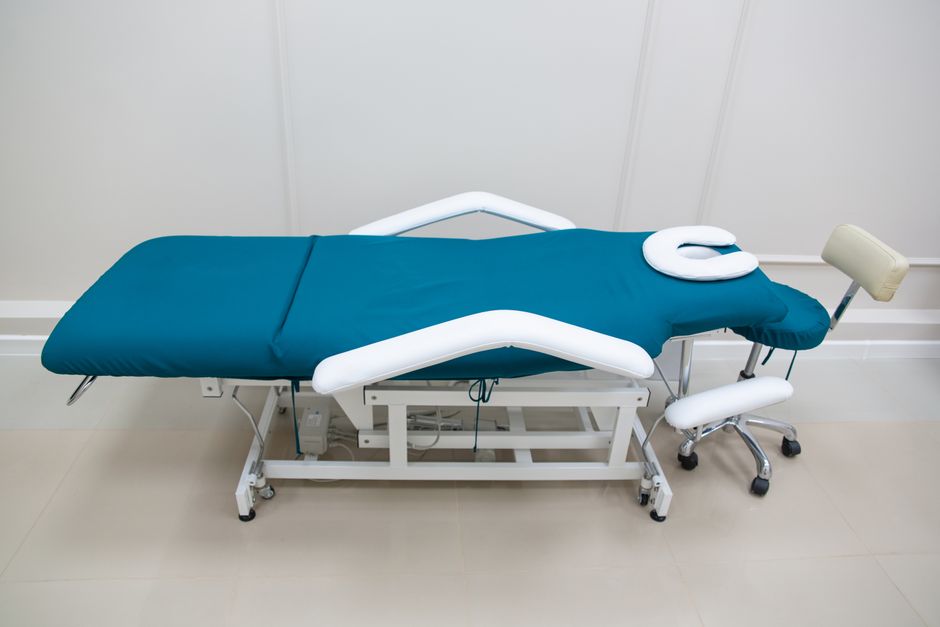
The decision usually comes down to four factors: specialist depth, accreditation rigor, cost positioning relative to alternative destinations, and the existence of a structured medical tourism framework.
Korea has more board-certified plastic surgeons per capita than any other country. Seoul’s Gangnam district alone hosts over 600 plastic surgery clinics within a 2-square-kilometer area.
Dental implant centers, fertility specialists, and dermatology clinics cluster in the same way — meaning a patient travelling for one procedure has high-quality alternatives if needed.
Cost positioning is the second factor. Korean hospitals charge 30–60% less than equivalent US or UK clinics for cosmetic, dental, and elective orthopedic procedures.
Compared to Bangkok, Istanbul, or Dubai — common alternative destinations for international medical travel — Korean prices are competitive while the clinical infrastructure (training systems, malpractice oversight, government accreditation) is more developed.
| Factor | Korea | UK / US (private) | Dubai / Istanbul |
|---|---|---|---|
| Avg travel time to destination | 10–17 hrs (region-dependent) | 6–14 hrs | 3–10 hrs |
| Average cost of rhinoplasty | $3,000–$7,000 | $10,000–$18,000 | $3,500–$6,500 |
| Government accreditation | KAHF + KOIHA (mandatory) | CQC / JCAHO | JCI (voluntary) |
| Specialist density (plastics) | Highest globally | Moderate | High but variable |
| Medical tourism visa | C-3-3 (sponsored) | No specific visa | Standard tourist |
KAHF and KOIHA: The Two Accreditations That Matter
Two government accreditations form the safety floor for medical tourism in Korea. Understanding them is the first step in choosing a clinic.
KOIHA (Korea Institute for Healthcare Accreditation) is the baseline. Under Article 58 of the Korean Medical Act, all hospital-level facilities must pass KOIHA before they can apply for higher-tier accreditations. KOIHA assesses general patient safety, clinical governance, and medical infrastructure.
KAHF (Korean Accreditation program Hospitals for serving Foreign patients) is the foreign-patient specialization layer added on top. Introduced by the Ministry of Health and Welfare in 2017, KAHF evaluates institutions across two systems: a 56-item Foreign Patient Specialization System and a 93-item Patient Safety System.
Practically, this means a KAHF-accredited clinic has been verified for English-language consultation infrastructure, interpreter quality, international patient coordinators, and dispute-resolution processes — alongside the clinical safety standards that KOIHA already certifies.
When evaluating any Korean medical tourism provider, the first question to ask is whether the specific clinic (not just the network or facilitator) holds current KAHF accreditation. Accreditation is renewed periodically; current status matters more than historical status.
The C-3-3 Medical Tourism Visa
Korea’s C-3-3 visa is purpose-built for medical tourists from designated countries. Over 100 countries qualify, including the United States, the UK, Australia, the UAE, Saudi Arabia, Kazakhstan, Vietnam, Indonesia, the Philippines, Mongolia, China, and Russia, alongside most of Europe, the Americas, and Asia.
A standard tourist visa or visa-free entry can also be used for shorter outpatient procedures in many cases.
The visa cannot be applied for as a private individual without a sponsor.
It must be invited and processed through a Korean medical institution that has been registered with the Ministry of Health and Welfare and, in many cases, designated as an “Excellent Attraction Institution for Medical Tourism” by the Minister of Justice.
This designation is reviewed each year by an evaluation committee in September and October.
The C-3-3 process in practice:
- Submit medical records and treatment request to a registered Korean medical tourism facilitator or hospital
- Receive a treatment plan and invitation letter from the Korean institution
- Apply for the C-3-3 visa at the Korean embassy or consulate in your country with the invitation letter, medical records, financial proof, and standard application documents
- Travel and undergo treatment — the C-3-3 typically grants a 90-day stay, extendable for ongoing treatment
- Companion visa — accompanying family members can be sponsored under the same application
Processing time is usually 7–15 working days. The medical institution sponsorship is what differentiates this from a standard tourist visa — and what protects you legally if treatment terms are not met.
The Procedures Korea Genuinely Leads In
Plastic Surgery and Cosmetic Procedures
Korea performs more cosmetic procedures per capita than any other country. The depth shows in specialty sub-fields most countries don’t have separate training tracks for: Asian-specific rhinoplasty, facial contouring (jawline reduction, zygoma), double eyelid surgery, and revision plastic surgery for patients with failed procedures elsewhere.
The most-requested procedures from international patients include rhinoplasty (especially revision work after procedures done in the home country), facial fat grafting, breast augmentation, body contouring after weight loss, and facial bone contouring.
Dental Implants and Cosmetic Dentistry
Korean dental clinics deliver implant procedures at 40–60% of UK and US prices with comparable training and material standards. Full-mouth restoration packages including implants, crowns, and same-day prosthetics are widely available. The dental tourism corridor in Gangnam is particularly developed for English-speaking foreign patients.
Dermatology and Skin Treatments
Korea’s cosmeceutical industry is the second-largest globally. Dermatology clinics offer treatments still emerging in many overseas private markets: thread lifts, laser pigmentation correction calibrated across skin tone ranges, ultherapy, and prescription-grade skincare protocols.
Orthopedic and Spine Surgery
Korean orthopedic hospitals lead in minimally invasive spine surgery and joint replacement. The cost-quality ratio for hip and knee replacement is especially favorable — typically 50% less than equivalent US private treatment.
Fertility and IVF
Korean fertility clinics have some of the highest IVF success rates in Asia. The treatment cycles are well-regulated and the cost (approximately $3,000–$5,000 per cycle) is significantly lower than UK or US equivalents.
“The combination of mandatory government accreditation, transparent specialist credentials, and structured foreign-patient infrastructure makes Korea one of the most-regulated medical tourism destinations in Asia.”
The Patient Journey Step-by-Step
The typical journey for an international medical tourist to Korea spans 6–12 weeks from first enquiry to post-care follow-up. Knowing the structure helps you ask the right questions early.
Pre-Travel Phase (4–8 weeks before departure)
- Initial consultation: medical records review, photos if applicable, video consultation with the Korean specialist
- Treatment plan and quote: formal written plan including surgical approach, anesthesia, hospital stay duration, and itemized cost
- Visa sponsorship: the Korean institution issues an invitation letter for the C-3-3 application
- Travel logistics: flights, accommodation (most clinics partner with nearby hotels), airport pickup
- Pre-operative testing: blood work and clearance done either in your home country or on arrival, depending on procedure
In-Korea Phase (1–4 weeks, procedure-dependent)
- Day 1: in-person consultation, final treatment plan confirmation, payment, and informed consent
- Day 2–3: procedure
- Recovery and follow-up: on-site recovery for the critical window (typically 5–10 days for surgical procedures), then outpatient follow-ups
- Discharge readiness check: the clinic certifies fitness to fly before you depart
Post-Care Phase (6 weeks to 6 months after return)
- Remote follow-ups: video check-ins with the Korean specialist at 2 weeks, 6 weeks, and 3–6 months
- Local follow-up coordination: the Korean clinic typically liaises with a partner clinic in your home country for any in-person follow-up needed
- Complications protocol: a clear escalation pathway is part of the original treatment agreement (this is one of the things KAHF accreditation specifically requires)
Cost Considerations for International Patients
Specific costs vary significantly by clinic, procedure complexity, and individual case. The figures below are 2026 indicative ranges from publicly available Korean medical tourism data — your actual quote will be issued by the clinic after a personalized assessment.
| Procedure | Indicative range (USD) | Typical stay |
|---|---|---|
| Rhinoplasty | $3,000–$7,000 | 10–14 days |
| Double eyelid surgery | $1,000–$3,000 | 5–7 days |
| Dental implant (per tooth) | $700–$1,800 | 2 visits over 3 months |
| IVF cycle | $3,000–$5,000 | 2–3 weeks |
| Hip replacement | $12,000–$18,000 | 14–21 days |
These ranges cover the surgical and clinical costs only. Travel, accommodation, food, and post-care follow-up are separate. Plan a total budget of 1.4–1.6× the procedure quote to cover the full trip realistically.
Common Mistakes International Medical Tourists Make
Booking through an unaccredited facilitator. The visa, the clinic, and the facilitator are three separate accreditations. Verify all three.
Underestimating the recovery window. For surgical procedures, the minimum safe stay before flying is usually 7–10 days. Trying to compress the trip increases complication risk.
Skipping the pre-travel medical records review. Korean clinics decide whether to accept your case based on records review. Showing up with incomplete records is the #1 cause of last-minute treatment plan changes.
Not asking about post-care liaison. Reputable Korean clinics maintain referral partnerships with clinics in your home country. Confirm this before travel — it matters if a complication appears after you return.
Paying full upfront without staged payment. Standard structure is 20–30% deposit on visa sponsorship, balance on day of treatment. Full-upfront requests should raise immediate concern.
Frequently Asked Questions
How long does it take to get a C-3-3 medical tourism visa?
Typically 7–15 working days after submission, once the Korean medical institution has issued the invitation letter. The bottleneck is usually the invitation letter (which requires complete medical records), not the visa stamping itself.
Plan 4–6 weeks total from first enquiry to having visa-in-hand. Processing times vary slightly by issuing embassy and country.
Can I bring a family member as a companion?
Yes. The C-3-3 visa allows companion sponsorship under the same application. Most clinics actively encourage this for major surgical procedures — having a companion improves recovery outcomes and is often required by the clinic for discharge.
What currencies do Korean clinics accept for payment?
Most Korean clinics quote and accept payment in USD or KRW. Some major hospitals also accept EUR, GBP, AED, and CNY. Payment is typically wire transfer or international card.
Local currencies (Naira, Cedis, Ringgit, Dong, etc.) are usually not accepted for the main treatment fee — bring physical currency only as backup for incidental expenses.
What if I need follow-up surgery after returning home?
Reputable Korean clinics provide a 12-month revision policy for cosmetic and dental procedures. The revision is performed at no surgical fee — you pay only the travel and accommodation costs. Verify this is in your written treatment agreement before signing.
How do I verify a clinic is genuinely KAHF-accredited?
Cross-reference at the official Korean Ministry of Health registry (medicalkorea.or.kr). If a clinic claims accreditation but cannot provide the accreditation number when asked, treat that as a strong signal to look elsewhere.
Are there cultural, religious, or dietary considerations international patients should know about?
Yes. Korea has growing infrastructure for Halal food (especially around Itaewon and Gangnam districts in Seoul), kosher options in international hotels, and vegetarian-friendly hospital catering with advance notice.
Prayer rooms are increasingly common in foreign-patient-focused clinics. Most KAHF-accredited hospitals have multilingual coordinators and culturally-aware concierge staff. Confirm specific requirements with your facilitator before travel.
What’s the safest way to find a reputable Korean clinic from overseas?
Start with the Medical Korea portal, which lists hospitals registered to treat foreign patients, or use a registered medical tourism facilitator that works with KAHF-accredited clinics. KmedTour is an information resource only; it does not book treatment or refer patients.
Last updated: May 2026