
- Asian rhinoplasty is an augmentation-focused nose surgery designed for Asian nasal anatomy — typically building bridge height, adding tip projection, and refining thicker skin.
- It differs from Western rhinoplasty in goal, technique, and materials: Western procedures reduce a large nose; Asian procedures enhance a flatter nose using grafts (cartilage, silicone, Gore-Tex).
- Because Asian noses have weaker cartilage, thicker skin, and lower bridges, the surgery demands a specialist experienced in ethnic rhinoplasty — especially in Gangnam, Seoul, where clinics are JCI-accredited and MFDS-regulated.
- A typical recovery takes 2–3 weeks for swelling to subside, but final results appear after 6–12 months.
You’ve looked in the mirror a hundred times. You want a nose that still looks like yours — just more defined, balanced, and confident. That’s exactly what Asian rhinoplasty delivers.
But here’s the problem: most online guides lump all nose jobs together. They don’t talk about the unique anatomy of an Asian nose, the different surgical goals, or why a surgeon trained in Western techniques might give you a result you hate.
As of 2026, over 60% of medical tourists visiting Korea for plastic surgery choose rhinoplasty — and the number one destination is Gangnam, Seoul., including blepharoplasty, Why? Because Korean surgeons have mastered the art of augmentation without looking “done.”
In this guide, I’ll break down exactly what Asian rhinoplasty is, how it differs from Western rhinoplasty, and what you need to know before booking your surgery in Korea.
| Aspect | Asian Rhinoplasty | Western Rhinoplasty |
|---|---|---|
| Primary Goal | Augmentation (build height, projection) | Reduction (shrink, narrow, deproject) |
| Nasal Bridge | Low, flat; needs dorsal augmentation | High, prominent; often reduced |
| Tip Cartilage | Weak, poorly defined; needs grafting | Strong, defined; often trimmed |
| Skin Thickness | Thicker dermis; conceals definition | Thinner; highlights every contour |
| Common Materials | Silicone implant, Gore-Tex, autologous cartilage | Cartilage only (septal, ear, rib) |
| Recovery Clues | Swelling lasts longer; tip takes months to settle | Faster resolution; bruising common |
What exactly is Asian rhinoplasty?
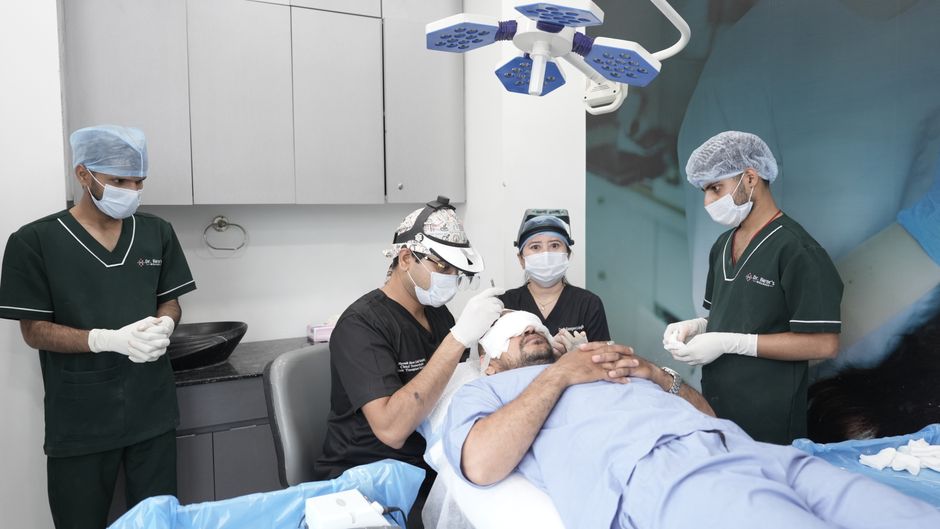
Asian rhinoplasty is a specialized set of surgical techniques designed to augment and reshape the Asian nose while preserving ethnic identity. Unlike Western rhinoplasty, which often removes tissue, Asian rhinoplasty adds structure — using implants, cartilage grafts, or both.
The procedure addresses three distinct features found in most Asian noses: a low nasal bridge, weak tip cartilages, and thick, oily skin that hides contour.
According to a 2020 review in Archives of Plastic Surgery (Lao et al.), Asian rhinoplasty is “more commonly augmentation in nature,” meaning surgeons must harvest additional cartilage from the ear or rib to build projection.
In Gangnam, Seoul’s plastic surgery hub, clinics routinely perform Asian rhinoplasty for both local and international patients. Korean surgeons combine precision implant carving with autologous grafting to create a nose that is both taller and naturally structured.
How does Asian nasal anatomy differ from Western?
Asian noses are structurally distinct: shorter, wider, with weaker cartilage and thicker skin. Understanding these differences is critical because a surgeon who treats only Caucasian patients will likely fail — or worse, produce an unnatural result.
Let’s break down the key anatomical differences:
Why is the bridge so low in Asian noses?
The nasal bone and upper lateral cartilages are flatter and less projected in many Asian populations. This creates the characteristic “low bridge.” In Caucasian noses, the bridge is naturally high and narrow. That’s why Western rhinoplasty often shaves bone down, while Asian rhinoplasty adds material on top.
Why are Asian tip cartilages weaker?
The lower lateral cartilages (the framework of the nasal tip) are often thinner, shorter, and less domed in Asian noses. Tip cartilages can also be weaker than in Western noses. Weak cartilage means the tip lacks definition and tends to droop.
Surgeons must use columellar struts, onlay grafts, or tip grafts to build projection.
Why does thicker skin matter?
Thicker, more sebaceous skin hides the underlying surgical work. Western patients often see crisp definition within weeks. Asian patients may wait 6–12 months for the full result because the thick envelope of skin takes longer to shrink-wrap around the new framework.
This is why experienced surgeons in Gangnam prefer open rhinoplasty — it gives them the visibility needed to sculpt precisely under heavy skin.
Why does Asian rhinoplasty require a different surgical approach?
Because the goals are reversed — you’re adding, not subtracting — the entire surgical plan changes. Western surgeons are trained to break and narrow bones, trim cartilage, and tighten skin. Asian rhinoplasty demands the opposite: grafting, implant placement, and structural reinforcement.
How does augmentation differ from reduction?
Augmentation uses implants or autologous grafts to raise the bridge and project the tip. The most common materials in Korea are silicone implants (flexible, easy to remove), Gore-Tex (ePTFE) (newer, more biocompatible), and rib or ear cartilage (used for tip work and complex revisions).
In contrast, Western rhinoplasty almost never uses synthetic implants. The American standard is pure cartilage. But for Asian patients, a properly carved silicone implant is safe and provides predictable dorsal height — as long as it’s placed by a surgeon who understands subperiosteal pocket dissection to prevent movement.
Why do Korean surgeons prefer open rhinoplasty?
Open rhinoplasty (a small incision across the columella) gives the surgeon full visibility of the weak tip cartilages. Because Asian anatomy requires precise grafting, closed rhinoplasty (hidden incisions) is risky — the surgeon is working blind in a structurally fragile area.
Open rhinoplasty is very common in Gangnam.
How do I choose a surgeon for Asian rhinoplasty in Seoul?

Look for three things: experience with Asian anatomy, hospital accreditation, and regulatory oversight. Seoul’s Gangnam district has over 600 plastic surgery clinics — but quality varies widely.
Why is JCI accreditation important?
JCI (Joint Commission International) accreditation ensures the clinic meets global patient safety standards. Hospitals like Samsung Medical Center and Severance Hospital are JCI-accredited. For medical tourists, this means English-speaking staff, international infection control, and emergency protocols.
What role do MFDS and HIRA play?
MFDS (Ministry of Food and Drug Safety) regulates all medical devices, including silicone implants and Gore-Tex used in rhinoplasty. Always confirm that your implant is MFDS-approved — many unapproved devices are available cheaper online but carry higher risks.
HIRA (Health Insurance Review and Assessment) publishes clinic outcome data in Korea. While mostly used by locals, you can request HIRA quality ratings from any clinic in Gangnam. A clinic that scores well on HIRA outcomes is likely to have lower revision rates.
For more on choosing a clinic, see: Asian Rhinoplasty Clinics in Seoul and Rhinoplasty Clinics in Seoul.
What are the risks and recovery differences?
Asian rhinoplasty has a slightly longer recovery and higher risk of implant-related issues than Western reduction rhinoplasty. But with a skilled surgeon, complications are rare.
Here’s what to expect:
- Swelling: Peaks at day 2–3, then slowly resolves. By week 2, you look presentable. At month 3, you see the shape. At month 6–12, the final result emerges.
- Bruising: Less than Western rhinoplasty because bone work is minimal. But swelling is more generalized due to thicker skin.
- Implant complications: Infection, extrusion, or deviation are possible. Using MFDS-approved implants and a surgeon with 10+ years’ experience reduces this to under 2%.
- Revision risk: Higher in Asian rhinoplasty because the nose is reconstructed rather than reduced. Choose your first surgeon wisely — the cost of a revision in Gangnam ranges from $5,000 to $12,000.
Frequently Asked Questions about Asian Rhinoplasty
What is the difference between rhinoplasty and Asian rhinoplasty?
“Rhinoplasty” is the general term for nose surgery; Asian rhinoplasty is a subtype that focuses on augmentation rather than reduction. Ethnic rhinoplasty (which includes Asian, African, and Middle Eastern noses) respects specific anatomical differences. Asian rhinoplasty is the most augmentation-heavy version.
Can I take Cialis 2 weeks after rhinoplasty?
No. Cialis (tadalafil) is a blood thinner and can increase bleeding risk during recovery. Most surgeons advise avoiding erectile dysfunction medications for at least 3–4 weeks after rhinoplasty. Always ask your clinic — MFDS-regulated hospitals in Gangnam will provide a clear medication list.
How should I choose the right Asian plastic surgeon in the US?
That depends on your location and procedure, but top names include Dr. Samuel Lam (Dallas), Dr. Edwin Williams (New York), and Dr. Andrew Jacono (New York). However, for Asian rhinoplasty specifically, many patients choose Korea because surgeons there perform 10–20 of these procedures per week versus a few per month in the US.
See our guide to choosing a rhinoplasty clinic in Korea.
What is the hardest nose to fix?
The hardest nose to fix is a previously operated Asian nose with thick skin and implant complications. Scar tissue, weakened cartilage, and skin that has been stretched make revisions extremely complex.
That’s why the first surgery should be done right by a surgeon who specializes in Asian rhinoplasty — preferably in a JCI-accredited Gangnam hospital.
Related Reading
- Asian Rhinoplasty Clinics in Seoul
- Rhinoplasty Clinics in Seoul
- Rhinoplasty Clinics in Korea
Last updated: May 02, 2026